
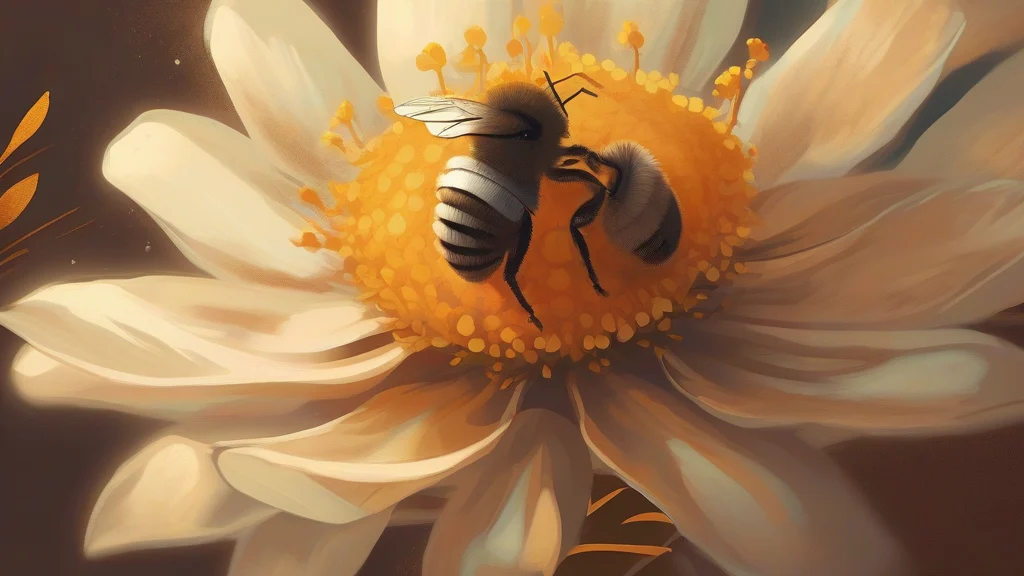
What does pollination mean?
Pollination is the biological process by which pollen is transferred from the male reproductive structures of a flower to the female structures. The pollen may be carried by wind, water, insects, birds, bats, or other animals. When pollen moves from an anther to the stigma of the same flower, the process is called self-pollination; transfer between different plants is cross-pollination. Pollination is essential to sexual reproduction in flowering plants because it brings male reproductive cells into contact with the female reproductive structures, making fertilization possible. It is also important in agriculture and ecology, where it affects crop yields, plant diversity, and the survival of flowering species. Although pollination is sometimes casually equated with fertilization, the two describe different stages: pollination is the delivery of pollen, while fertilization is the subsequent fusion of reproductive cells.
nounThe transfer of pollen from the male reproductive structures of a flower to the female reproductive structures, enabling fertilization. It may occur within the same flower, between flowers of the same plant, or between different plants.
- The transfer of pollen from the anthers of a flower to a stigma, whether within the same flower, to another flower on the same plant, or to a flower of another plant.
"Bees play an important role in pollination across many flowering plants."
"The garden's lavender attracts bees that improve pollination."
"Wind is responsible for pollination in many grass species."
The plural is occasionally used when referring to separate instances of the process.
"The study compared pollinations occurring during different parts of the growing season."
Pollination is nature's tiny delivery system: without it, most flowering plants could not reproduce.
Reviewed by Deb Chak, Editor. AI-assisted content curated by RJS Tech Solutions LLP.
Where does pollination come from?
Pollination derives from pollinate, which was formed from pollen plus the suffix -ate, and the noun suffix -ion. The word pollen comes from Latin pollen, meaning "dust" or "fine flour," an apt reference to the powdery substance carried by the flower's reproductive structures. The related terms pollinator and pollinium also developed from this Latin root. Modern senses of pollination developed alongside the study of plant reproduction.
Related word forms
How pollination is actually used
The term is used in biology, horticulture, agriculture, and environmental science. It describes the transfer process rather than the later union of reproductive cells.
Easily confused with pollination
Pollination is the transfer of pollen, whereas fertilization is the fusion of male and female reproductive cells that ultimately produces a seed or fruit.
Pollen is the powder-like material containing male reproductive cells, while pollination is the process by which it is transferred.