
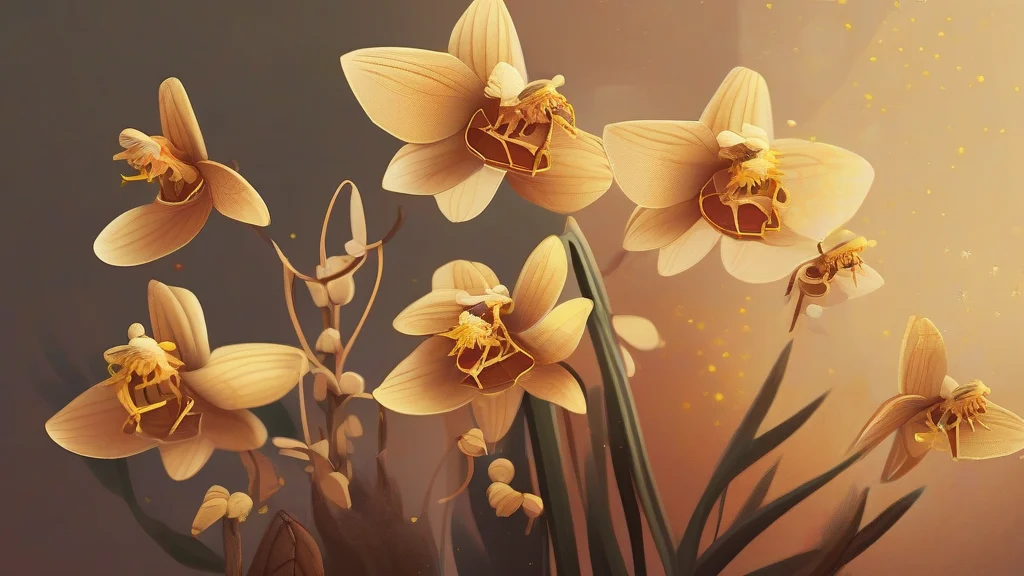
What does pollinium mean?
In botany, a pollinium is a cohesive mass of pollen grains transported as a single unit during pollination. Rather than functioning as loose dust, its grains are connected by specialized structures, a sticky substance, or both. Pollinia are especially characteristic of orchids, where they form compact structures that attach to visiting insects and are deposited on a receptive surface at another flower. Their organization can make pollen transfer more efficient and may help determine which plants can successfully pollinate one another. The term is therefore useful to anyone interested in floral biology, plant reproduction, or the relationships between flowers and their pollen-carrying visitors. It should not be confused with pollen, which refers to the individual grains, or with a pollinator, which is the animal carrying the pollen.
nounA coherent mass of pollen grains that is transferred as a unit during pollination. In some plants, especially orchids, it is a specialized structure adapted for carrying pollen between flowers.
- A coherent mass of pollen grains, typically held together by connecting structures or a sticky substance and transferred as a unit during pollination.
"The orchid's yellow pollinium attached to the insect's back as it visited the flower."
"A yellow pollinium adhered to the beetle as it crawled across the orchid."
"Each pollinium carries numerous pollen grains to the flower's receptive surface."
The standard plural is pollinia, each of which denotes one pollen mass.
"The flower produced two pollinia that adhered to the visiting insect."
Instead of loose pollen drifting between flowers, a pollinium travels as a single pollen packet—often hitching a ride on an insect.
Reviewed by Deb Chak, Editor. AI-assisted content curated by RJS Tech Solutions LLP.
Where does pollinium come from?
Pollinium was formed in New Latin from Latin pollen, a term associated with fine dust or pollen. The botanical Latin suffix -ium is used in forming names for structures and substances. In English, the word developed within modern botanical terminology alongside terms such as pollinate and pollination, all belonging to the pollin- word family.
How pollinium is actually used
This is a specialized botanical term used primarily in descriptions of flowering plants and their pollen-transfer mechanisms. It normally refers to the whole organized mass rather than an individual pollen grain.
Easily confused with pollinium
A pollinium is a mass of pollen grains, whereas a pollinator is an organism, such as an insect or bird, that transfers pollen between flowers.
Pollen consists of the individual grains themselves, while a pollinium is a coherent group of those grains transferred as one unit.