
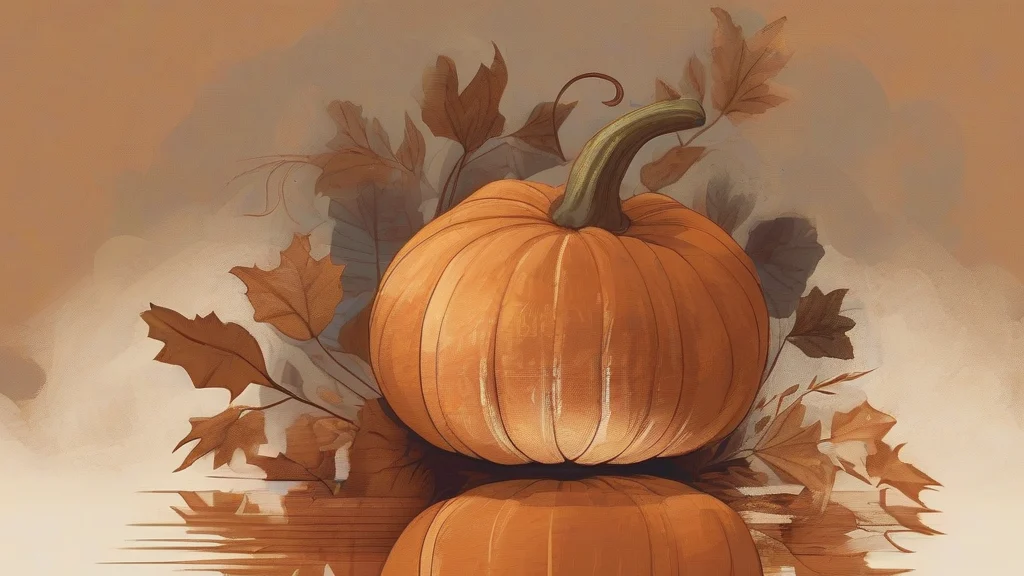
What does pompion mean?
Pompion is an archaic English spelling of "pumpkin." In modern usage it generally refers to the familiar round, orange gourd, or more generally to a member of the same group of cultivated gourds. The word is chiefly encountered in older literature, historical recipes, and decorative or nostalgic contexts; for ordinary contemporary use, "pumpkin" is standard. Its continued appearance in phrases involving roasting, pies, carving, and seasonal decoration reflects its close historical association with autumn food and festivities. The spelling is especially useful to readers of early English texts, where it may appear where modern editions would often print "pumpkin." Although recognizable and readily understandable, pompion should generally be treated as a historical or literary variant rather than as a current alternative spelling in formal writing.
nounAn archaic variant spelling of "pumpkin," especially a round, orange gourd used as food or decoration.
- An archaic spelling of the word "pumpkin," referring to the plant, its fruit, or the fruit used as food.
"The old recipe calls for a ripe pompion roasted with honey and spices."
"Children carved grinning faces into the pale pompions growing in the garden."
"The pie contained a richly spiced filling of roasted pompion and apples."
The usual plural in historical and literary usage; in modern English, "pumpkins" is standard.
"Several pumpkins and green pompions were arranged around the doorway."
Once a standard spelling in English, "pompion" now survives mainly in recipes, old literature, and the occasional festive flourish.
Reviewed by Deb Chak, Editor. AI-assisted content curated by RJS Tech Solutions LLP.
Etymology of pompion
Pompion developed through medieval and early modern English forms associated with Old French pompon, ultimately from Latin pepo, a word for a melon-like gourd. The form reflects a French-influenced spelling and is historically related to pumpion and pumpkin. Over time, the English word's meaning narrowed to the common pumpkin and its culinary and festive uses.
How pompion is actually used
The form is now archaic and literary rather than standard modern English. Modern speakers will normally use "pumpkin." It may appear deliberately in historical recipes or seasonal writing to create an old-fashioned tone.
Easily confused with pompion
A pompion is an old spelling of "pumpkin," whereas a pompom is a rounded tuft or ball used in decoration.