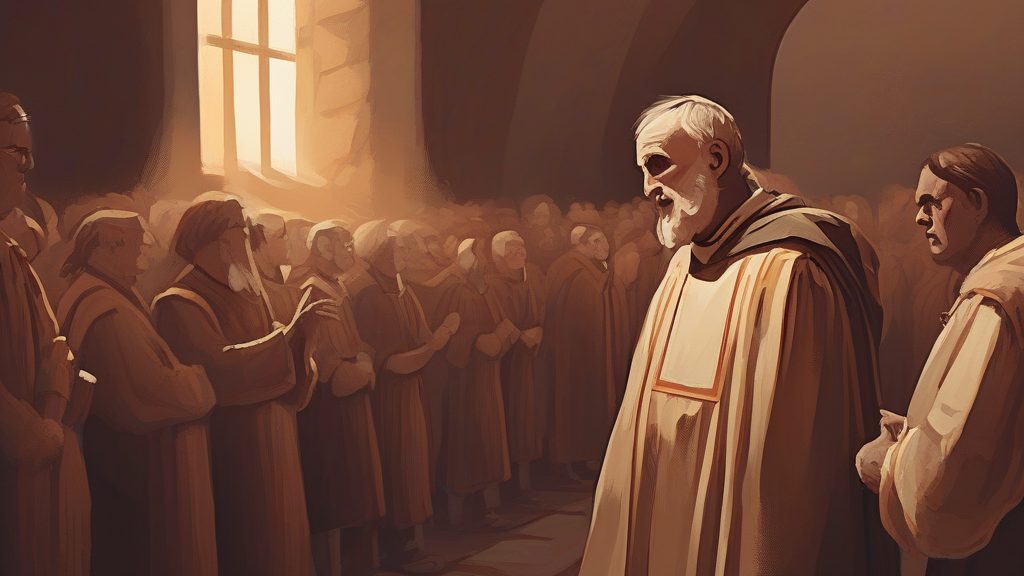
What does popery mean?
Popery refers to the system or principles of the Roman Catholic Church, especially as opposed to Protestantism. The term has been used throughout history to describe the Church's elaborate rituals, dogmatic teachings, and hierarchical structure. While often used in a derogatory manner, popery can also be used in a more neutral sense to describe the Church's principles and practices. The concept of popery has been a subject of controversy throughout history, with many Protestant reformers viewing it as a symbol of Catholicism's perceived corruption and oppression. Despite this, the Catholic Church remains a major world religion, with over a billion adherents. Understanding popery is essential for grasping the complexities of Christian history and the ongoing debates between Catholicism and Protestantism.
nounThe system or principles of the Roman Catholic Church, especially as opposed to Protestantism.
- The system or principles of the Roman Catholic Church, especially as opposed to Protestantism.
"The popery of the medieval period was characterized by its elaborate rituals and dogmatic teachings."
"The popery of the medieval period was characterized by its elaborate rituals and dogmatic teachings."
"The Catholic Church's popery has been a subject of controversy throughout history."
Reviewed by Deb Chak, Editor. AI-assisted content curated by RJS Tech Solutions LLP.
Etymology of popery
The word 'popery' is derived from the Latin 'papae', meaning 'of the pope'. It originated in the 16th century as a term used by Protestant reformers to describe the Catholic Church's perceived corruption and oppression. Over time, the term has taken on a more neutral connotation, simply referring to the Church's principles and practices.
How popery is actually used
The term 'popery' is often used in a derogatory manner to refer to the Catholic Church, especially in historical contexts. However, it can also be used in a more neutral sense to describe the Church's principles and practices.