
What does porpoise mean?
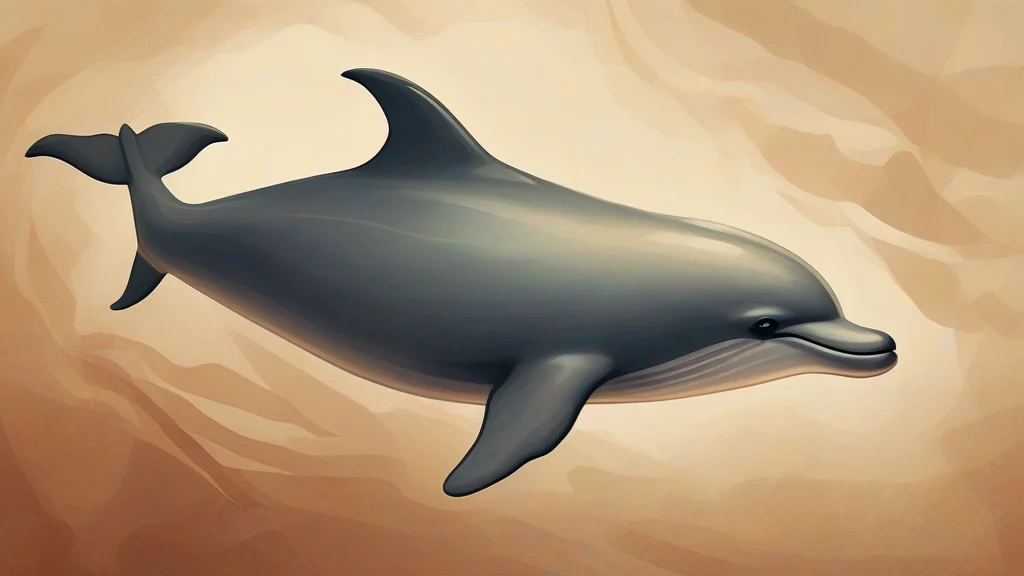
A porpoise is a small, toothed marine mammal belonging to the family Phocoenidae. It has a compact, rounded body, a blunt head, a small beak, and a horizontal tail fluke, and it breathes air, lives in groups, and feeds on fish and other marine animals. Porpoises occur in coastal and oceanic waters of the North Atlantic, North Pacific, and nearby regions, with the harbour porpoise being familiar around parts of the British coast and eastern North America. The word is often confused with “dolphin,” but the two names refer to different families within the toothed-whale group. Porpoises are generally more compact than dolphins and have fewer teeth, though individual features vary among species. The term also appears in historical descriptions and in the verb sense of moving or leaping rapidly through water in a porpoise-like way.
A small toothed marine mammal of the family Phocoenidae, with a rounded body, blunt snout, and horizontal tail fluke.
"The porpoise was swimming just below the surface."
Modern zoological usage distinguishes porpoises from dolphins, which belong to the family Delphinidae.
To swim or move rapidly through water in a porpoise-like manner, especially by repeatedly arching the body above and below the surface.
"Dolphins porpoised alongside the research vessel."
This is a literary or descriptive verb rather than a common everyday term.
The regular plural is “porpoises.” “Porpoise” is also used in the plural sense in collective phrases such as “a pod of porpoises.”
"The observers counted several porpoises near the shoal."
Porpoises are not simply small dolphins: they form their own family, and their rounded heads and compact bodies distinguish them from the longer-beaked, more streamlined species most people picture when they hear “dolphin.”
Reviewed by Deb Chak, Editor. AI-assisted content curated by RJS Tech Solutions LLP.
Where does porpoise come from?
The word comes through Middle French and Old French from a form associated with Medieval Latin porcus piscis, literally “pig fish.” The “pig” element reflects the rounded snout and blunt face of the animal, while “fish” was used in older European languages for large sea creatures, including whales and porpoises. The English noun developed from French, and its verb use refers to the characteristic porpoise-like movement through water. Related English words such as “pork” and “porcine” trace to the Latin word for a pig, porcus.
Related word forms
How porpoise is actually used
In modern zoological usage, “porpoise” is more precise than “dolphin”: porpoises are members of Phocoenidae, while dolphins are members of Delphinidae. In older writing and informal speech, the terms were sometimes used more broadly, so the intended sense can depend on context.
Easily confused with porpoise
A dolphin belongs to the family Delphinidae, while a porpoise belongs to the separate family Phocoenidae; the two groups differ in features such as body shape, dentition, and coloration.