
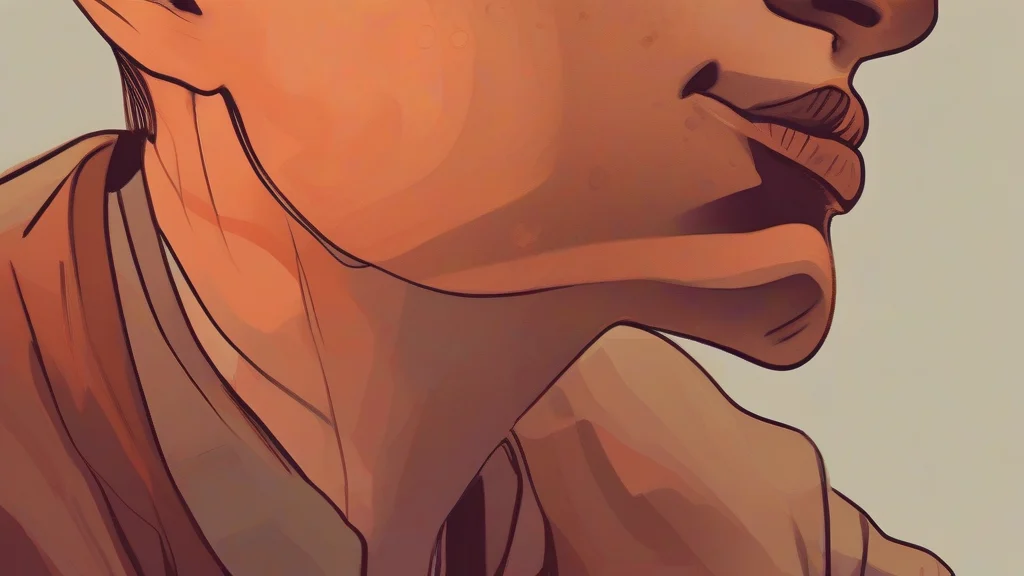
What does pouting mean?
Pouting describes either a pronounced pout or a person who is sulking. The most familiar sense concerns a facial expression in which the lips are pushed forward, often accompanying displeasure, frustration, or defiance. Pouting can also be used figuratively for a sullen or resentful manner, as when someone withdraws after an argument. Although the word often carries a mildly critical or humorous tone, it may be affectionate when referring to a child making a playful pout. Its usefulness lies in capturing a familiar nonverbal sign of bad feeling that can be more emphatic than simply being annoyed. In appearance, pouting lips are distinct from pursed lips: the former project outward, while pursed lips are compressed or drawn together. Pouting is common in informal British and American English and appears especially often in descriptions of expressions, faces, and sulking behavior.
Having the lips pushed forward or protruding; sulking or sullen in manner.
"Her pouting expression made the whole room laugh."
Often mildly teasing or disapproving when applied to a person's sulking behavior.
Protruding the lips, especially in an expression of displeasure; sulking.
"He was pouting after being told he could not join the game."
This is the present participle form of the verb pout.
A pout can express displeasure before a single word is spoken.
Reviewed by Deb Chak, Editor. AI-assisted content curated by RJS Tech Solutions LLP.
Where does pouting come from?
Pouting is derived from the English verb pout, which is recorded in Middle English and relates to protruding or swollen lips. The verb's older ancestry is generally traced to Old French pout, associated with a swollen or protruding lip, while the sense of acting sullenly developed as the word came to describe a characteristic expression of displeasure.
Related word forms
How pouting is actually used
The expression is usually informal and mildly disapproving or teasing when describing a person's sulking. It can also describe prominently protruding lips without implying anger.