
What does prokaryote mean?
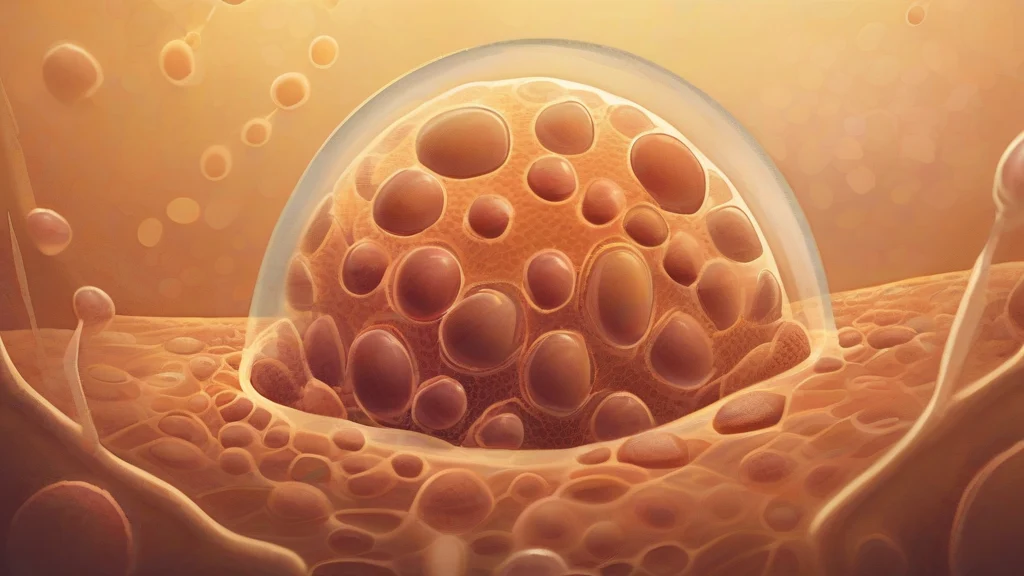
A prokaryote is a single-celled organism whose cell lacks a membrane-bound nucleus and the membrane-bound organelles found in eukaryotic cells. The category includes all bacteria and archaea, two of the oldest and most widespread groups of organisms on Earth. Prokaryotes can live in an enormous range of environments, including soil, water, air, and extreme habitats such as hot springs and highly saline lakes. Their genetic material is generally located in a nucleoid region rather than enclosed within a nucleus, and they reproduce primarily through binary fission, in which one cell divides into two. Although prokaryotes are usually microscopic, their collective impact is immense: they contribute substantially to nutrient cycles, participate in symbioses, and include many species that cause disease. The word is chiefly used in scientific and educational contexts, where it provides a precise way to distinguish organisms with non-nucleated cells from eukaryotes, whose cells contain a true nucleus.
nounA single-celled organism whose cells lack a membrane-bound nucleus and the other membrane-bound organelles characteristic of eukaryotes. Prokaryotes include bacteria and archaea.
- A single-celled organism whose cells lack a membrane-bound nucleus and membrane-bound organelles, including all bacteria and archaea.
"Researchers discovered a previously unknown prokaryote living in the deep ocean."
"The prokaryote reproduced by dividing into two identical cells."
"This prokaryote can survive in environments with extremely high temperatures and salinity."
The plural is formed by adding -s to the singular form.
"Many prokaryotes carry out essential chemical processes in the soil."
Most of the life on Earth consists of prokaryotes, including organisms so small that thousands could fit across the width of a human hair.
Reviewed by Deb Chak, Editor. AI-assisted content curated by RJS Tech Solutions LLP.
Etymology of prokaryote
The word combines the Greek prefix pro-, meaning “before” or “in front of,” with karyon, meaning “nucleus,” and the suffix -ote, used in biological nomenclature. The resulting term refers to a cell or organism whose nucleus is not enclosed by a membrane. The related word eukaryote was formed with eu-, meaning “true” or “good,” to describe organisms with a true nucleus.
Related word forms
How prokaryote is actually used
The term is primarily scientific and is used in biology, microbiology, and related fields. In everyday discussion, it is less common than the broader and more familiar terms bacteria or microorganisms.
Easily confused with prokaryote
A prokaryote lacks a membrane-bound nucleus, whereas a eukaryote has one.
Bacteria are prokaryotes, but prokaryotes also include archaea.