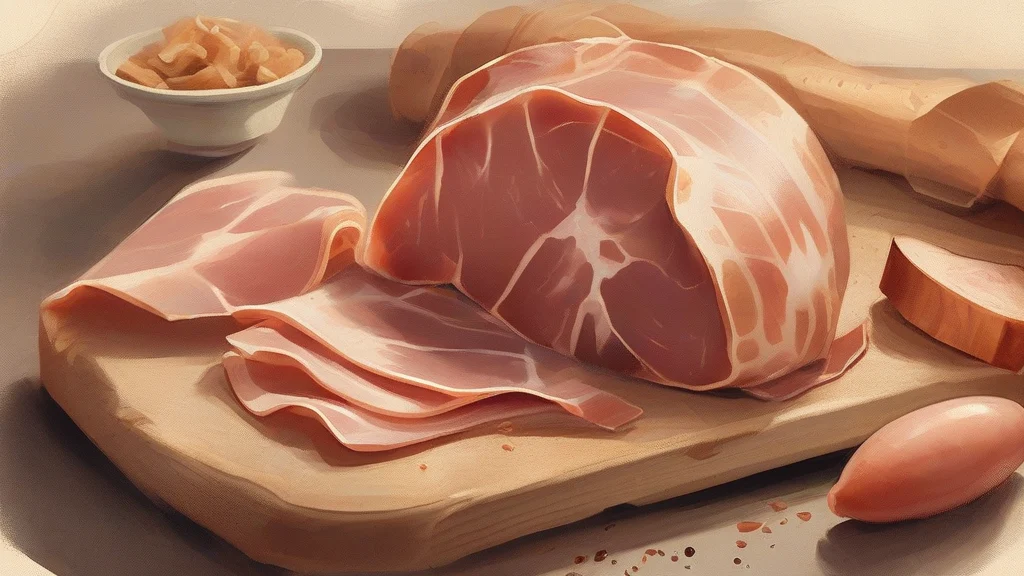
What does prosciutto mean?
Prosciutto is a type of thinly sliced, cured ham that is typically made from the hind leg of a pig. It is often served as an antipasto or used in Italian cuisine, where it is paired with fresh arugula, shaved Parmesan cheese, and other ingredients. Prosciutto is a popular ingredient in many Italian dishes, including pasta sauces, salads, and pizzas. It is also often served as a snack or appetizer, paired with melon or figs. Prosciutto is a versatile ingredient that can be used in a variety of dishes, from simple to complex. Its rich, savory flavor and tender texture make it a popular choice among chefs and home cooks alike. Whether you're looking to add a touch of Italian flair to your meals or simply want to try something new, prosciutto is a great choice.
nounThinly sliced, cured ham, typically made from the hind leg of a pig, often served as an antipasto or used in Italian cuisine.
- Thinly sliced, cured ham, typically made from the hind leg of a pig, often served as an antipasto or used in Italian cuisine.
"The chef carefully arranged the prosciutto on the platter, garnished with fresh arugula and shaved Parmesan cheese."
"The chef carefully arranged the prosciutto on the platter, garnished with fresh arugula and shaved Parmesan cheese."
"In Italian cuisine, prosciutto is often served with melon or figs."
Prosciutto is often used as a countable noun, referring to individual slices of cured ham.
"I had a few slices of prosciutto on my plate."
Reviewed by Deb Chak, Editor. AI-assisted content curated by RJS Tech Solutions LLP.
Etymology of prosciutto
The word 'prosciutto' comes from the Italian language, where it is derived from the Latin word 'prosciutum,' meaning 'dried ham.' Prosciutto has been a staple of Italian cuisine for centuries, and its popularity has spread to other parts of the world. In the United States, prosciutto is often served as an antipasto or used in Italian-American cuisine.
How prosciutto is actually used
Prosciutto is typically served as an antipasto or used in Italian cuisine. It is often served thinly sliced and cured.