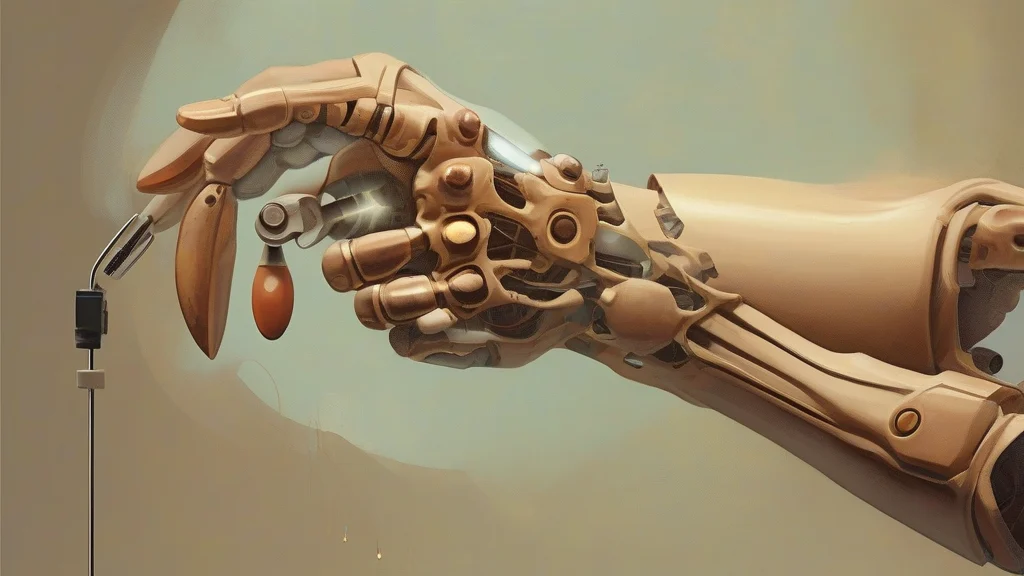
What does prostheses mean?
Prostheses refer to artificial devices that replace or support a part of the body, such as a limb, tooth, or other bodily structure. These devices are designed to restore function, alleviate discomfort, and improve the quality of life for individuals who have lost or were born without a body part. Prostheses can be custom-made to match the individual's needs and can be used to replace or support various parts of the body, including arms, legs, hands, feet, teeth, and other structures. The use of prostheses has become increasingly advanced, with modern prosthetics offering a range of benefits, including improved mobility, dexterity, and appearance. Overall, prostheses play a vital role in helping individuals with physical disabilities or impairments to lead active and fulfilling lives.
nounArtificial devices that replace or support a part of the body, such as a limb, tooth, or other bodily structure.
- Artificial devices that replace or support a part of the body
- Plural of prosthesis
"The patient was fitted with prostheses on both legs after the accident."
"The patient was fitted with prostheses on both legs after the accident."
"The hospital specializes in creating custom prostheses for patients with unique needs."
The plural form 'prostheses' is used to refer to multiple devices.
"The hospital has a large collection of prostheses for patients with different needs."
Reviewed by Deb Chak, Editor. AI-assisted content curated by RJS Tech Solutions LLP.
Etymology of prostheses
The word 'prostheses' originates from the Greek word 'prosthesis', which means 'addition' or 'appendage'. The term has been used in medicine since the 16th century to describe artificial devices that replace or support a part of the body. The plural form 'prostheses' is used to refer to multiple devices.
How prostheses is actually used
Formal and technical contexts often use 'prosthetic devices' or 'prosthetic appliances', while informal contexts may simply use 'prosthetics' or 'false limbs'.