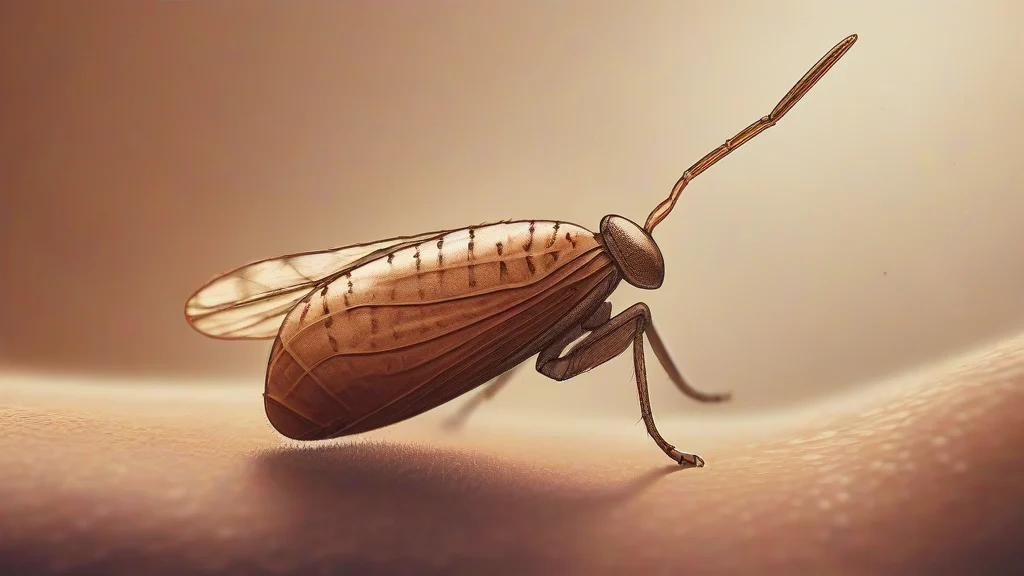
What does psyllid mean?
A psyllid is a small, usually winged insect that belongs to the family Psyllidae. These insects are also known as jumping plant lice and are known for their ability to suck plant sap, potentially acting as vectors for plant diseases. Psyllids can cause significant damage to crops and plants if their populations are not managed properly. They are an important area of study in entomology and plant pathology due to their role in plant health. Understanding psyllids is crucial for developing effective strategies to control their populations and mitigate their impact on agriculture.
nounA psyllid is a small, usually winged insect of the family Psyllidae, also known as jumping plant lice or psyllids. They are plant-sucking insects that can be vectors of plant diseases.
- A small, usually winged insect of the family Psyllidae.
- A vector of plant diseases.
"The garden was infested with psyllids, which were damaging the young shoots of the citrus trees."
"The entomologist studied the life cycle of the psyllid to understand its role in spreading plant viruses."
"Psyllids can cause significant damage to crops if not properly managed."
The plural form 'psyllids' is used to refer to multiple individuals of the species.
"The entomologist collected several psyllids for further study."
Reviewed by Deb Chak, Editor. AI-assisted content curated by RJS Tech Solutions LLP.
Etymology of psyllid
The term 'psyllid' originates from the Greek word 'psyllos', meaning 'flea', likely due to the insect's jumping ability. The family name Psyllidae was established by Blanchard in 1840. The psyllid's etymology is tied to its physical characteristics and behavior.
How psyllid is actually used
The term 'psyllid' is primarily used in entomology and plant pathology. It is a technical term and may not be commonly used in everyday conversation.