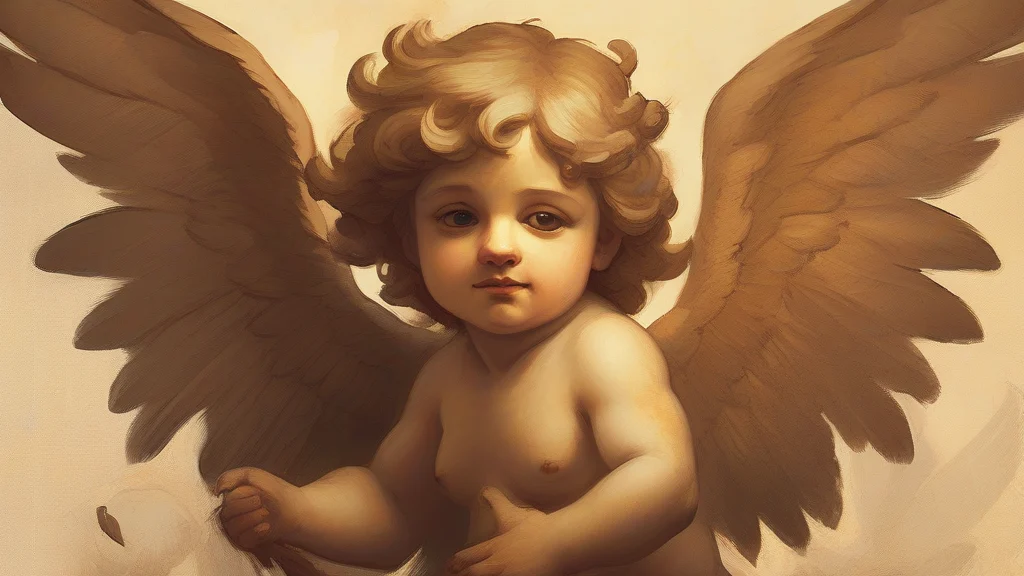
What does putto mean?
A putto is a small, winged, and naked child often depicted in Renaissance and Baroque art. These cherubic figures are typically shown with wings and are commonly found in paintings, sculptures, and architectural decorations. The term 'putto' refers to a single figure, while 'putti' is the plural form. Putti are often used to add a playful or symbolic touch to artworks. They are frequently associated with themes of innocence, purity, and divine presence. The use of putti in art dates back to ancient times but became particularly popular during the Renaissance. Artists like Michelangelo and Raphael frequently incorporated putti into their works, often depicting them in dynamic and naturalistic poses.
nounA putto is a type of cherubic figure often depicted in art, particularly in Renaissance and Baroque styles, typically shown as a small, winged, and naked child. These figures are commonly found in paintings and sculptures.
- A small, winged, and naked child depicted in art.
- A type of figurine or sculpture of a cherubic child.
"The artist's use of puttos in the fresco added a playful touch to the otherwise solemn scene."
"The ceiling of the Sistine Chapel features numerous puttos in Michelangelo's famous frescoes."
"The garden statue was a beautifully crafted putto with wings outstretched."
The plural form 'putti' is used when referring to multiple figures.
"The ceiling of the chapel was adorned with numerous putti, each one unique in its pose and expression."
Reviewed by Deb Chak, Editor. AI-assisted content curated by RJS Tech Solutions LLP.
Etymology of putto
The term 'putto' originates from the Italian language, where it is used to refer to a small, winged child. The word is derived from the Latin 'putus', meaning 'boy'. In art history, putti are often associated with the depiction of cherubim, which are described in the Bible as winged, childlike creatures. The use of putti in art became widespread during the Renaissance, particularly in Italy, where artists sought to revive classical themes and motifs.
How putto is actually used
The term 'putto' is often used interchangeably with 'putti', though 'putti' is the plural form. The word is commonly used in art history and criticism.