
What does quail mean?
Quail has two established uses. As a noun, it denotes a small game bird with a compact body, short wings, and a distinctive call; the name applies to several Old World species as well as to the distinctive birds of the Americas known as New World quails. Quail eggs are prized in some cuisines, and the birds are familiar to hunters and birdwatchers. As a verb, quail means to lose courage or cower before a threatening or unwelcome prospect. Expressions such as “quail at the challenge” convey fear, hesitation, or a sudden failure of resolve. The verb often has a formal or literary tone, but its meaning is clear: a person who quails does not confront the difficulty. Although the two meanings share a spelling and pronunciation, they developed through separate historical borrowings. The noun is ordinary in descriptions of wildlife, while the verb is particularly useful in literary contexts about intimidation, moral pressure, or reluctance.
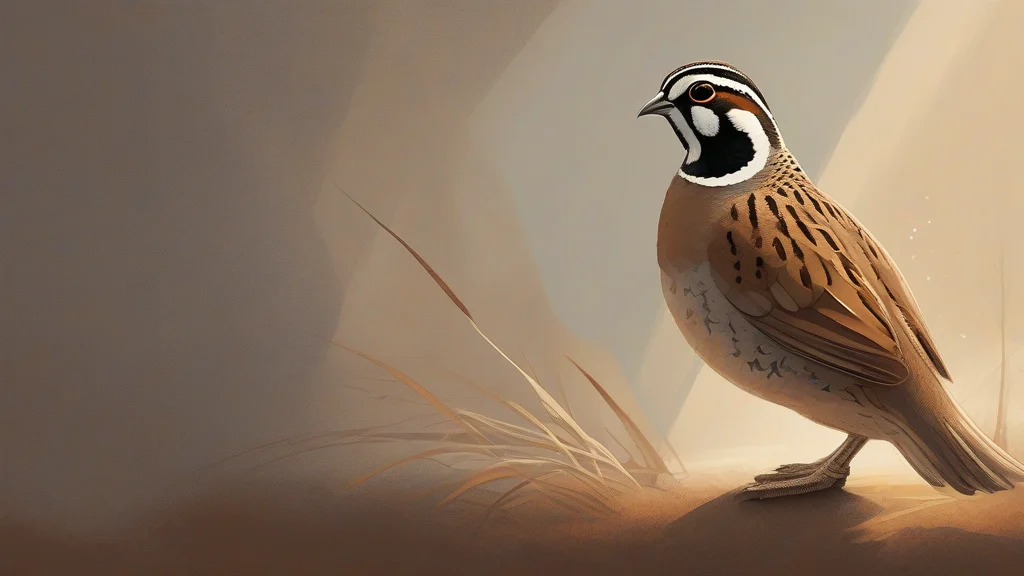
Any of various small, ground-dwelling game birds, especially species of the Old World genus Coturnix and the New World family Odontophoridae.
"A flock of quails rose suddenly from the edge of the field."
The singular can denote an individual bird or the species; the plural may refer to several birds or collectively to the birds themselves.
To cower, shrink back, or lose courage because of fear or an intimidating prospect.
"He refused to quail at the prospect of defending his proposal."
Common in formal and literary prose. “Quail at” and “quail before” are frequent constructions; the third-person singular is “quails,” and the past tense is “quailed.”
Use “quails” for multiple birds or when referring collectively to the birds.
"Wild quails shelter in dense cover near fields and hedgerows."
A frightened quail can become almost motionless, relying on its cryptic plumage to blend into the ground.
Reviewed by Deb Chak, Editor. AI-assisted content curated by RJS Tech Solutions LLP.
Where does quail come from?
The noun entered Middle English through Anglo-Norman and Old French forms derived ultimately from a Medieval Latin diminutive of Latin quaqua. The verb came into Middle English from Old French quaillier, “to cower,” although the ultimate origin of that French word is uncertain. These separate developments account for the noun’s long-established use for the bird and the verb’s association with shrinking from danger.
Related word forms
How quail is actually used
The noun is common in both British and American English, although the species most often evoked may differ by region. The verb is formal or literary and is especially common in the expression “quail at” something.
Easily confused with quail
A quail is a bird, while a quale is a quality or property considered in relation to other things.