
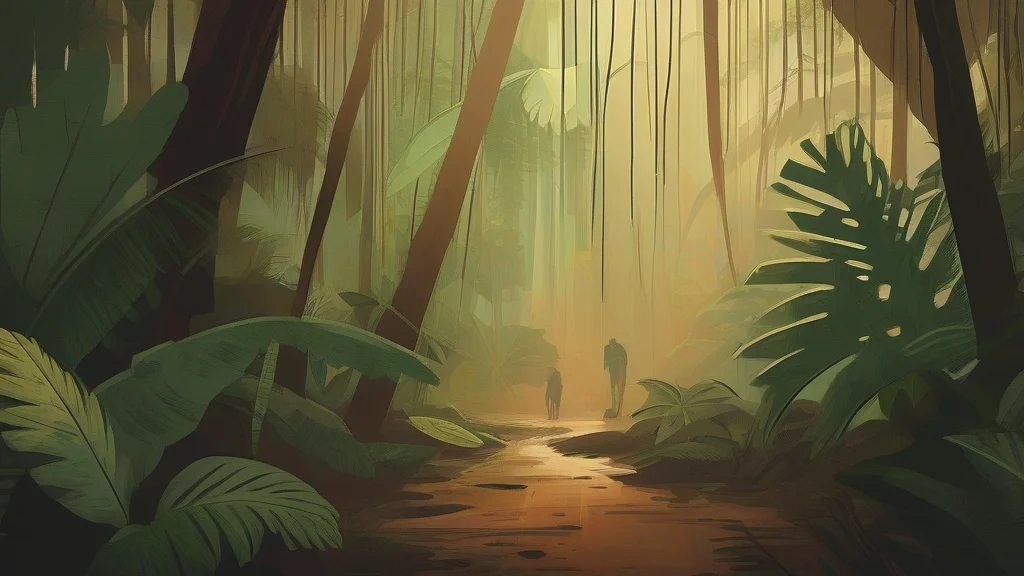
What does rainforest mean?
A rainforest is a forest that receives a large amount of rainfall and therefore supports dense, lush vegetation and rich biological diversity. The term most often refers to tropical rainforests, which typically have a layered structure of vegetation: emergents, canopy, understory, forest floor, and often a complex root layer. Rainforests contain many species of plants, animals, fungi, and microorganisms, and they can play an important role in regulating local climates and storing carbon. Although rainforest is sometimes used interchangeably with jungle, the words are not exact synonyms: jungle emphasizes thick, tangled growth, while rainforest describes an ecological forest type defined primarily by rainfall and climate. The word is common in environmental reporting, conservation, geography, and travel writing.
nounA dense forest in a region with high rainfall, characterized by lush vegetation, a layered plant structure, and exceptional biodiversity. The term can also refer more broadly to a tropical or subtropical forest with substantial year-round rainfall.
- A forest with a high-rainfall climate, typically one of the world's major tropical biomes.
"The expedition crossed a rainforest where orchids grew on the branches of towering trees."
"Many species of tree frogs make their home in the rainforest."
"The conservation organization worked to protect the rainforest from illegal logging."
The plural is formed by adding -s to the compound.
"Rainforests around the equator are home to millions of species."
Rainforests cover only a small fraction of Earth’s land surface, yet they contain a remarkable share of the planet’s species.
Reviewed by Deb Chak, Editor. AI-assisted content curated by RJS Tech Solutions LLP.
Where does rainforest come from?
Rainforest is a compound formed in English from rain and forest, combining the word for atmospheric precipitation with the word for a large area of trees. Both elements are old English in origin: rain reflects the Germanic word for rainfall, while forest comes through Old English and ultimately from a term associated with wooded land. The compound became established in the 19th century as botanical and geographical writers described the vegetation of wet tropical regions. Its components and related forms remain common in English, including rainfall, rainy, forestry, and afforestation.
How rainforest is actually used
In general usage, rainforest usually refers to a tropical forest with high rainfall, though it can also be used more broadly for any forest with a wet climate. It is distinct from jungle, which more specifically suggests dense, tangled vegetation, often in a particular area.