
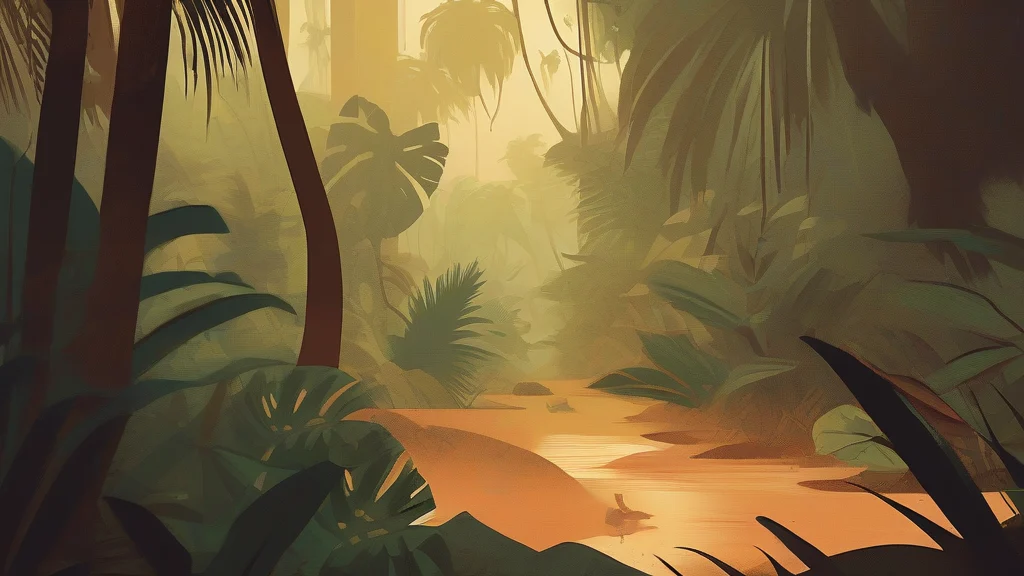
What does jungle mean?
A jungle is a dense, tangled expanse of vegetation, most commonly associated with tropical or subtropical forests. In everyday speech, the word can also describe any place where growth is abundant and difficult to penetrate, and it can figuratively mean a complicated situation filled with confusing choices, obstacles, or intense competition. The expression “political jungle,” for example, presents politics as an environment in which alliances and manoeuvres dominate and straightforward progress is difficult. “Jungle” is especially useful because it carries both a concrete geographical meaning and a widely understood metaphorical one. The literal sense also carries an association with remote, unfamiliar, and sometimes threatening environments, although the word is not limited to describing wilderness. In general modern English, it is neither formal nor technical, but it remains vivid and unmistakable in both literal and figurative contexts.
nounA dense, tangled area of vegetation, especially one in a tropical or subtropical region. By extension, it can refer to a complicated or confusing situation in which it is difficult to make progress.
- A dense area of vegetation, especially in a tropical or subtropical region.
- A wild, tangled, or overgrown place more generally.
- A complicated situation or field of activity in which navigation and progress are difficult.
"The expedition made its way through the dense jungle, following the course of a narrow river."
"They followed a narrow trail deeper into the jungle, where the trees blocked out most of the sunlight."
"Corporate politics can turn even a simple decision into a political jungle."
The plural is used for distinct areas of dense vegetation or for separate figurative situations.
"The novel explores the political jungles of two different cities."
The word travelled from Sanskrit through Hindi into English during the period of British rule in India, turning a South Asian landscape into a global symbol of wild, tangled growth.
Reviewed by Deb Chak, Editor. AI-assisted content curated by RJS Tech Solutions LLP.
Where does jungle come from?
The word comes from Hindi jangal, meaning forest, scrub, or an uncultivated wooded area. Hindi borrowed the term ultimately from Sanskrit jāṅgala, an ancient word associated with dry, rough, or wooded land. English adopted the word in the early 19th century during the period of British administration in India, and its meaning broadened from a South Asian terrain to dense vegetation in general and later to figurative confusion or disorder.
Related word forms
How jungle is actually used
The word is common in literal descriptions of tropical and subtropical vegetation, but in figurative use it often suggests confusion, disorder, or difficult competition. In British usage, “jungle” can also refer to dense woodland or scrub in a less specifically tropical setting.
Easily confused with jungle
A jungle is a densely vegetated area or a figurative complex situation, whereas jangle means a sharp, often repetitive sound or, as a verb, to make such a sound.