
What does ramble mean?
To ramble is to speak, write, or travel at length in a wandering or disorganized way. In conversation, the word usually suggests that a speaker has moved away from the main subject, although it can also describe an informal, relaxed chat. In writing, a ramble is typically an extended account that lacks clear focus or organization. The word can describe a walk without a fixed destination, particularly one taken for pleasure in the countryside. “Ramble” also applies to vegetation or structures that spread irregularly. In its figurative uses, the term often carries a mildly negative implication, suggesting verbosity or a failure to stay focused, while in descriptions of walking it can be neutral or appreciative. It is a familiar word with both literal and figurative uses, and it contrasts with more neutral terms such as “wander” or “meander” by often implying a lack of direction or purpose.
To speak or write at length without a clear organization or relevant purpose; to wander in speech or writing.
"He tended to ramble whenever the conversation moved beyond his area of expertise."
Often used critically when someone has lost the thread of the subject.
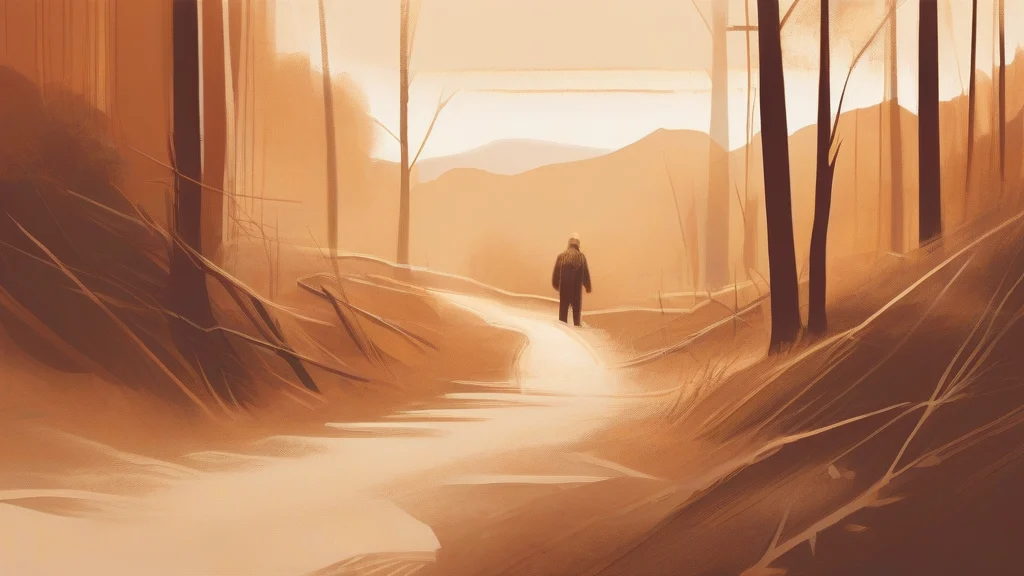
To walk or travel without a particular destination or route; to wander.
"They rambled through the old town until dusk."
Common in British and American English for a long, informal walk.
A long, wandering journey or walk, especially one taken without a particular destination.
"We went for a ramble in the hills before breakfast."
The word can suggest an unhurried, exploratory walk and is often used of walking in the countryside.
A long, disorganized piece of speech or writing that wanders from the main point.
"His apology turned into a long ramble about everything that had gone wrong that year."
This sense generally carries a mildly critical or amused tone.
The plural is used for separate wandering journeys or for extended, disorganized accounts.
"Their rambles through the mountains became a regular weekend tradition."
A ramble can describe both a long walk and the point where a conversation loses the thread of what it was meant to be.
Reviewed by Deb Chak, Editor. AI-assisted content curated by RJS Tech Solutions LLP.
Where does ramble come from?
The word comes through French, where it is related to forms meaning to walk or wander. English acquired it in the late 16th century in the sense of walking or traveling without a fixed course, and the modern sense of speaking or writing without order developed later. The word belongs to a family that includes “rambler” and “rambling,” while the related form “amble” refers more specifically to a leisurely walk.
Related word forms
How ramble is actually used
In its figurative sense, “ramble” often implies that speech or writing has wandered from the main point, and it may be mildly critical. “Ramble” can also be approving when referring to a long, informal walk through a landscape.
Easily confused with ramble
A ramble is a wandering journey or an extended, often disorganized talk, whereas a rumble is a deep rolling sound.
A ramble usually suggests wandering without a definite route or a rambling discussion, while an amble is a leisurely walk, especially on horseback.