
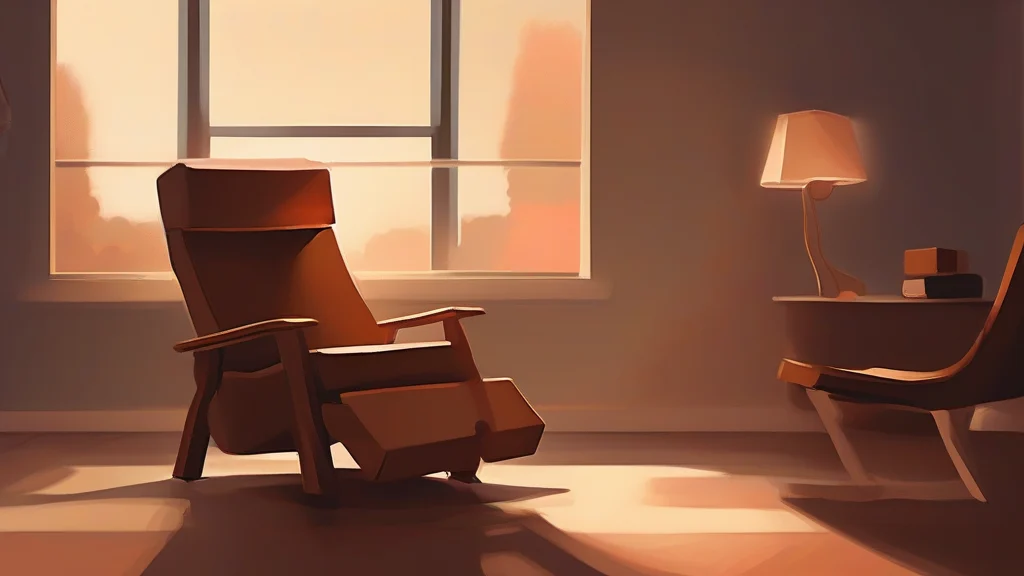
What does recline mean?
Recline means to lean or lie back, usually into a comfortable, relaxed position. A person may recline in a chair, on a sofa, or against a cushion, while a seat or backrest may recline into a more horizontal position. The word often conveys ease, comfort, or deliberate relaxation rather than ordinary upright sitting. Although “sit back” can be similar, recline more explicitly describes the backward angle of the upper body and is especially common in contexts involving adjustable seats. It can also be used figuratively, as in “recline in the approval of others,” though this literary use is less frequent than the physical one. Recline is straightforward and useful when precision matters: “sit” describes maintaining a seated position, whereas “recline” identifies the particular posture created by leaning backward.
To lean or lie back, or to adjust something such as a seat into a backward or more horizontal position.
"The driver reclined the seat slightly before beginning the journey."
Intransitive uses describe a person leaning or lying back, while transitive uses commonly describe adjusting a seat or backrest.
A backward-leaning or resting posture; the act or state of reclining.
"The chair has several settings, ranging from upright to a full recline."
The noun is less common than the verb and is chiefly used in descriptions of seating, posture, or physical arrangement.
The plural is uncommon; it is used mainly when referring to separate reclining positions or seat configurations.
"The cabin offers several reclines for passengers seated in adjoining rows."
Recline comes from the Latin reclinare, literally “to lean back,” an apt description of both a relaxed posture and the act of settling into one.
Reviewed by Deb Chak, Editor. AI-assisted content curated by RJS Tech Solutions LLP.
Where does recline come from?
Recline comes from Latin reclinare, formed from re- and clinare, “to bend” or “to lean.” The Latin verb referred to bending or leaning backward. English borrowed it in the early 17th century in the sense of leaning or lying back, and it later acquired the modern use of adjusting a seat or backrest into a more reclined position. Its root is also reflected in related English words such as incline, inclination, and declination.
Related word forms
How recline is actually used
The verb is common in British and American English. It can describe a person assuming a backward-leaning posture or a mechanism such as a seat being adjusted; with seats, “recline the seat” is often more idiomatic than “recline the seat back.”
Easily confused with recline
To recline is to lean or lie back, whereas a recluse is a person who deliberately avoids society or public life.