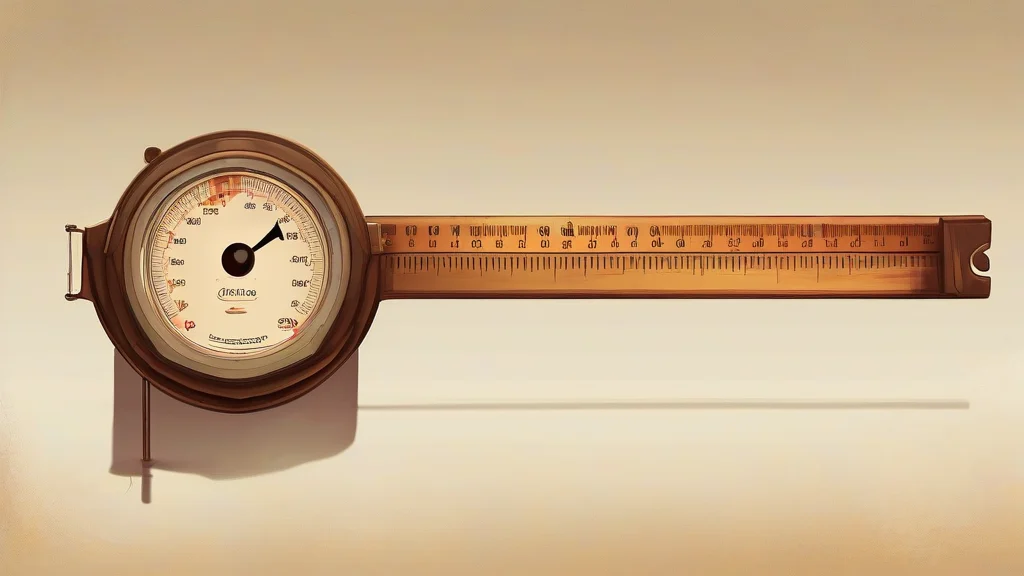
What does clinometer mean?
A clinometer is an instrument used to measure angles of slope, elevation, or inclination — that is, how far something tilts away from the horizontal or vertical. The device typically works by using gravity as a reference: a weighted needle, pendulum, or electronic sensor indicates the angle when the instrument is sighted along the surface being measured. Clinometers are indispensable tools in several professions. Surveyors use them to gauge the gradient of land; foresters use them to estimate tree heights by sighting the top of a tree from a measured distance; geologists use them to record the dip of rock strata; and engineers use them to check whether structures or machinery are level. Modern versions are often digital, but traditional hand-held optical models remain popular because they are light, cheap, and reliable. The word overlaps almost entirely with 'inclinometer', and the two names are frequently applied to the same devices. Though technical in register, the clinometer embodies a simple, elegant idea: letting gravity itself tell you the angle.
nounAn instrument for measuring angles of slope, elevation, or inclination of an object with respect to gravity.
- An instrument used in surveying, forestry, and engineering to measure angles of slope or elevation relative to gravity.
"The surveyor used a clinometer to measure the steepness of the hillside before planning the road."
"Standing at a known distance from the trunk, she sighted the treetop through her clinometer and calculated its height."
"The engineer checked the foundation's tilt with a digital clinometer before signing off on the inspection."
Regular plural; used when referring to multiple instruments or to the class of such devices generally.
"The department issued new digital clinometers to all of its field crews."
Foresters can measure a tree's height without climbing it — just stand back, sight the top through a clinometer, and do a little trigonometry.
Reviewed by Deb Chak, Editor. AI-assisted content curated by RJS Tech Solutions LLP.
Etymology of clinometer
The word 'clinometer' derives from the Greek 'klinein', meaning 'to lean' or 'to slope', combined with '-meter', from Greek 'metron' meaning 'measure'. It entered English in the early 19th century, coinciding with the growing professionalization of surveying and geology. The same Greek root 'klinein' gives English a family of related words, including 'incline', 'decline', and 'recline', all conveying the idea of leaning or sloping.
How clinometer is actually used
A technical term used mainly in surveying, forestry, geology, and civil engineering; rarely encountered in everyday conversation. In modern usage it overlaps heavily with 'inclinometer', and many devices are marketed under both names.
Easily confused with clinometer
The two terms are largely synonymous, but 'clinometer' traditionally refers to instruments measuring slopes and elevations in surveying and forestry, while 'inclinometer' is more common in engineering contexts for measuring tilt of structures.