
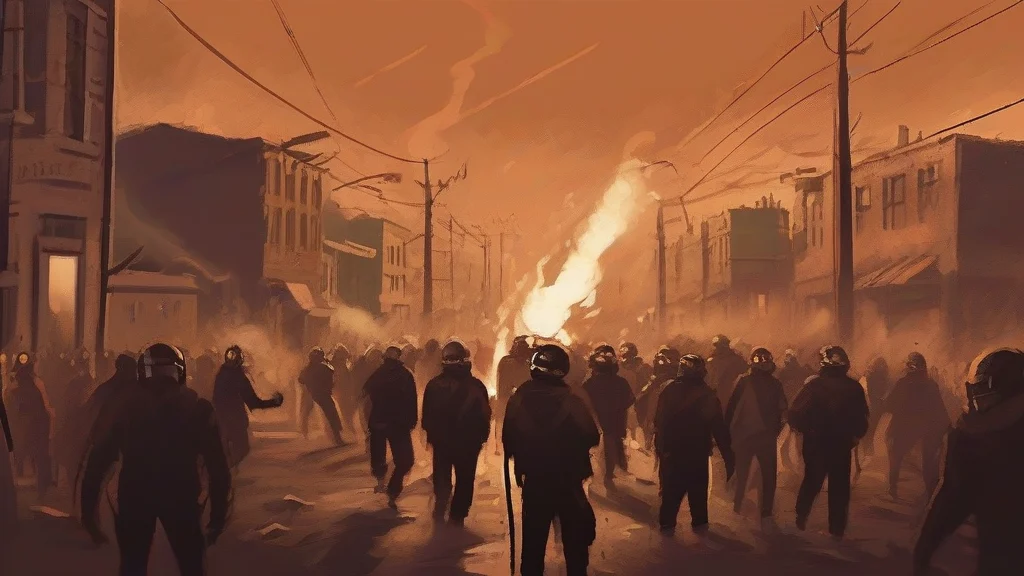
What does rioter mean?
A rioter is a person who takes part in a riot. The word is most commonly used when a public disturbance involves violence, intimidation, serious disorder, or the destruction of property. Unlike the more neutral words protester and demonstrator, it identifies someone as having crossed the boundary between peaceful or unlawful assembly and destructive collective disorder. The term has a strongly negative connotation and is often associated with confrontations involving police, damaged streets, fires, or looting. Accurate use matters because calling a person a rioter carries serious factual and moral implications, particularly in news reporting, public safety statements, and legal proceedings. In ordinary usage, however, the label can sometimes be applied loosely to disruptive demonstrators, so context and evidence are essential when describing the actions of an individual or crowd.
nounA person who takes part in a riot, especially one involving violence, serious disorder, or destruction of property.
- A person who participates in a riot, especially by committing acts of violence, intimidation, or property destruction.
"Police reported that several rioters had damaged vehicles near the city centre."
"Authorities said rioters threw objects at officers after the demonstration turned violent."
"The footage showed rioters looting shops in the aftermath of the clash."
The standard plural is rioters; rioter is also sometimes used attributively, as in “the rioter was charged.”
"The rioters dispersed after police used tear gas."
A rioter is not simply an angry protester: a riot generally involves violent or destructive public disorder.
Reviewed by Deb Chak, Editor. AI-assisted content curated by RJS Tech Solutions LLP.
Etymology of rioter
The word rioter was formed in English by adding the suffix -er to riot. The noun riot ultimately comes through French from Old French riote, associated with contention, dispute, or disorder. The derived adjective riotous and adverb riotously continue the same semantic field of commotion and uncontrolled disorder.
Related word forms
How rioter is actually used
The term is strongly accusatory and should be applied only to someone whose conduct genuinely constitutes participation in a riot. It is not a neutral substitute for “protester” or “demonstrator.”