
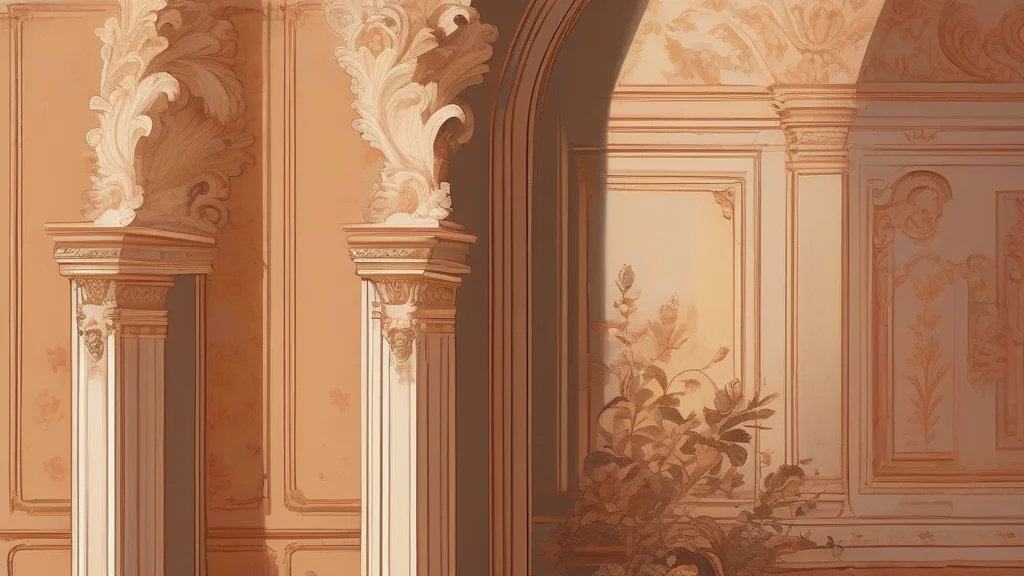
What does rococo mean?
Rococo denotes both an eighteenth-century European artistic style and, by extension, anything characterized by elaborate ornament and excessive refinement. Associated especially with French and Central European architecture, furniture, ceramics, painting, and interior design, the style is known for asymmetry, curved lines, light colors, shells, foliage, and lively figurative motifs. Its exuberant decoration developed from earlier Baroque traditions but generally appears lighter and more playful. Today, “rococo” is commonly used as an adjective for ornate objects or spaces and as a noun for the historical style itself. In critical contexts it can also imply that something is fussy, showy, or old-fashioned. The word is especially useful because it identifies a recognizable artistic manner while carrying a clear critical judgment about ornamentation that has grown excessive.
Ornate, elaborate, and often asymmetrical in style; by extension, excessively decorative or old-fashioned.
"The room combines rococo furniture with modern lighting."
Often implies extravagance when applied outside the historical style's original context.
The rococo style of eighteenth-century European art and design, characterized by asymmetrical ornament, curved forms, and exuberant decoration.
"The gilt furnishings illustrate rococo at its most exuberant."
The plural is used chiefly when referring to multiple examples of rococo works or distinct rococo styles.
"Several French rococos are displayed in the gallery."
Rococo’s elegant curves grew from humble pebbles: its French ancestor, rocaille, means “rockwork” or “pebblework.”
Reviewed by Deb Chak, Editor. AI-assisted content curated by RJS Tech Solutions LLP.
Where does rococo come from?
The English word comes from French rococo, an alteration of rocaille, a term associated with rockwork and pebbles. Rocaille was borrowed from Italian rocaglia, meaning “rubble,” and was ultimately traced to a Latin root meaning “rock.” The French term initially referred to ornament made with shells and pebbles before becoming the name of the elegant eighteenth-century style.
How rococo is actually used
In art history, “Rococo” capitalized refers to the historical European style; lowercase “rococo” is often used for any extravagantly ornamental quality. The term can be admiring when describing genuine eighteenth-century work, but mildly dismissive when applied to writing, decoration, or behavior considered overdone. The word has no significant regional restriction, though British and American vowel pronunciation differ.
Easily confused with rococo
Rococo developed from the Baroque but is generally lighter, more asymmetrical, and more playful, whereas Baroque art is typically grander, heavier, and more dramatic.