
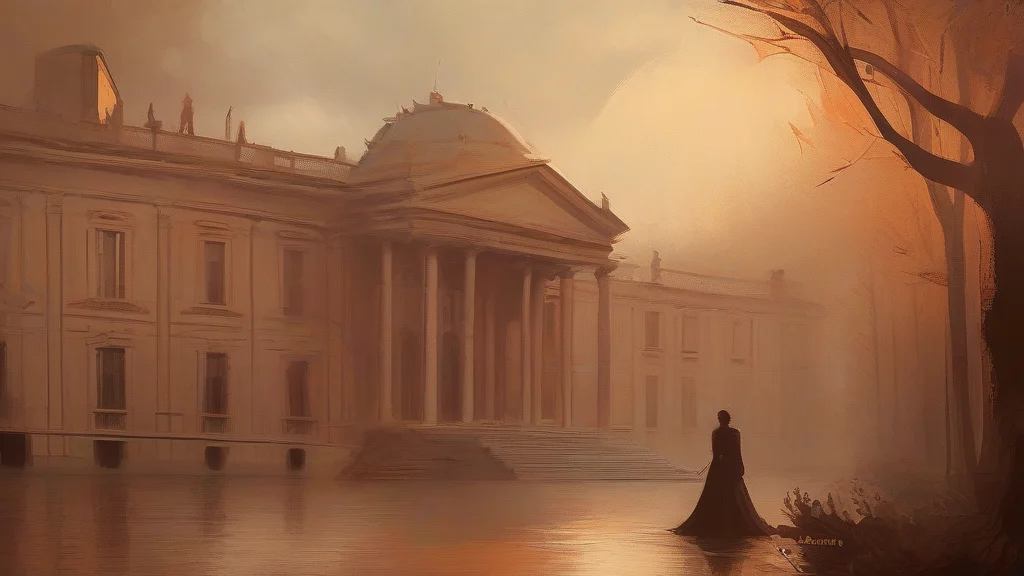
What does romanticism mean?
Romanticism describes both a major European cultural movement and a broader attitude of emotional idealism. In its historical sense, it developed around the turn of the nineteenth century as writers, artists, composers, and thinkers emphasized imagination, intense feeling, individual freedom, nature, history, and the sublime. Its subjects included childhood, folklore, revolution, distant landscapes, tragic love, and the extraordinary. Romantic works often reacted against the order, restraint, and rationalism associated with earlier classical traditions, although Romanticism encompassed several competing national and individual styles. The word can also characterize a personal outlook marked by idealized emotion or a strong attraction to adventure and beauty. In this broader sense, romanticism may suggest spontaneity and wonder, but it can also imply impracticality or sentimentality. The term remains important for understanding nineteenth-century literature, painting, music, philosophy, and political thought.
nounRomanticism was a European movement in literature, art, music, and intellectual life that emphasized emotion, imagination, individual experience, and the sublime. In broader usage, the term refers to an idealized, emotionally expressive approach to life, love, or nature.
- The late-18th- and early-19th-century European movement in literature, art, music, and thought that emphasized emotion, imagination, nature, and individual experience in opposition to rationalism and classical order.
- A broad tendency characterized by idealized feeling, especially in matters of love, nature, or individual experience.
"The novel's emotional intensity and celebration of individual freedom made it a defining work of Romanticism."
"Musicologists often trace the expressive style of the early nineteenth century to the ideals of Romanticism."
"Her approach to travel was pure romanticism, favoring spontaneity and imagination over rigid planning."
The word normally has no plural form. It names a movement, tendency, or collective cultural orientation rather than a countable kind of thing.
"The course examines Romanticism in European literature and music."
Romanticism turned storms, ruins, revolutions, and unrequited love into some of the most enduring images in Western culture.
Reviewed by Deb Chak, Editor. AI-assisted content curated by RJS Tech Solutions LLP.
Where does romanticism come from?
The word comes through English Romanticism from German Romanticismus, a term formed from the English word romantic with the suffix -ism. Both Romantic and romance ultimately relate to medieval vernacular narratives in the Romance languages, especially Old French romans, meaning a narrative or tale. The German critics applied Romanticism to the new cultural movement during the late eighteenth and early nineteenth centuries, after which the term was adopted more widely in European languages.
Related word forms
How romanticism is actually used
When referring to the historical movement, Romanticism is normally capitalized. In broader uses it may be abstract and evaluative, sometimes suggesting an unrealistic or idealized outlook. Its historical manifestations differed across Europe, so it should not be treated as a single uniform style.
Easily confused with romanticism
Romanticism names an artistic and intellectual movement, while romantic describes something characterized by love, emotion, or idealized sentiment.