What does rostrally mean?
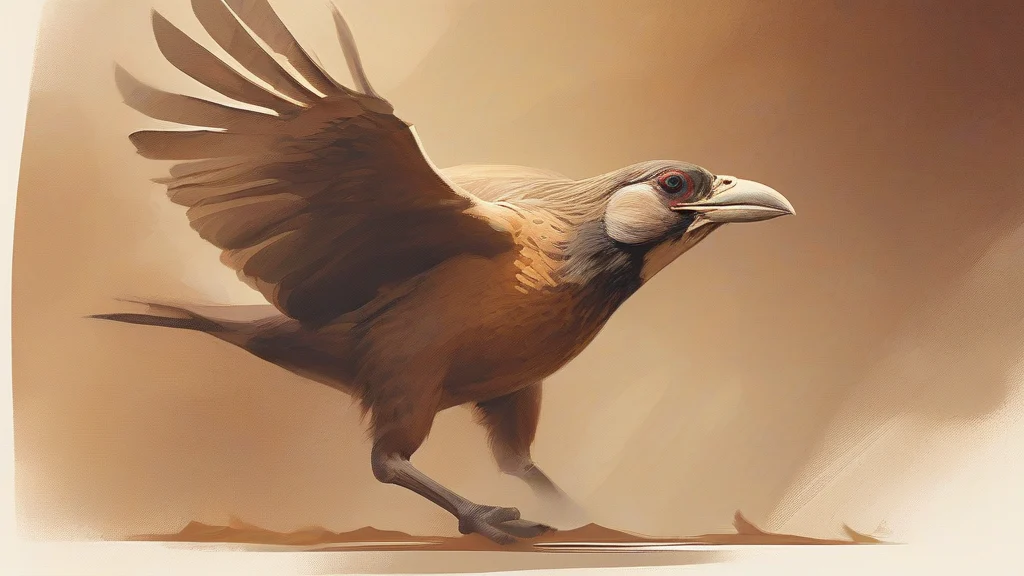
The adverb rostrally refers to a direction or location towards the beak, snout, or front of an organism, particularly in anatomical or biological contexts. It is often used to describe the positioning of organs, structures, or features along the body axis, with rostrally indicating a location towards the head or anterior part of the body. This term is commonly employed in fields such as anatomy, zoology, and medicine to provide precise and unambiguous descriptions of spatial relationships. Rostrally is a useful term for accurately conveying complex anatomical information, and its usage is prevalent in academic and professional settings.
adverbIn an anatomical direction towards the beak or snout; in a forward direction along the axis of the body.
- In an anatomical direction towards the beak or snout.
- In a forward direction along the axis of the body.
"The bird's eyes are positioned rostrally, allowing for a wide field of vision."
"The bird's beak is pointed rostrally, ideal for catching fish."
"The tumor was located rostrally in the brain, near the frontal lobe."
Reviewed by Deb Chak, Editor. AI-assisted content curated by RJS Tech Solutions LLP.
Etymology of rostrally
The term rostrally originates from the Latin word 'rostrum,' meaning 'beak' or 'snout.' The adverbial form is derived from the adjective 'rostral,' which describes something related to or resembling a beak. The use of rostrally in anatomical contexts dates back to the 17th century, when detailed descriptions of biological structures became increasingly important in scientific literature.
How rostrally is actually used
Typically used in formal or technical contexts, especially in anatomy, biology, and medicine.