
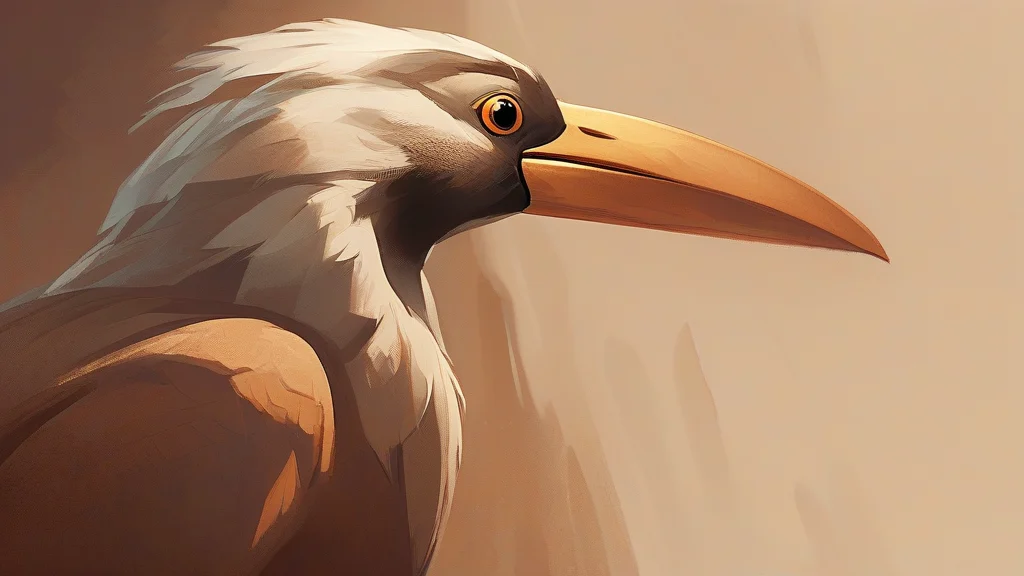
What does rostrate mean?
Rostrate is a technical adjective meaning “having a beak” or “shaped like a beak.” It is used especially in zoology, anatomy, and botany to describe structures that project into a narrow, pointed form. A rostrate head may belong to an insect or other animal whose mouthparts form a beak-like extension, while a rostrate fruit can have a long, tapering tip. The word is precise and specialized, so it is less common in ordinary conversation than words such as “beaked” or “pointed.” Its Latin origin connects it to both the beak of a bird and the prow of a ship, reflecting the broad idea of a projecting or pointed structure. Although the term may sound uncommon, it is useful when a general description would fail to distinguish the particular shape of a biological feature.
adjectiveHaving a beak or a beak-like projection, especially a structure that narrows to a pointed tip. The term is chiefly used in zoology, anatomy, and botany.
- Having a beak, a beak-like projection, or a structure ending in a pointed, beak-like tip.
"The insect has a rostrate head, with a pointed snout adapted for feeding."
"The beetle was distinguished from related species by its elongated, rostrate head."
"The plant's rostrate fruit tapers to a narrow point at its tip."
Rostrate comes from the same Latin root as the beak of a bird—and also the pointed prow of an ancient warship.
Reviewed by Deb Chak, Editor. AI-assisted content curated by RJS Tech Solutions LLP.
Etymology of rostrate
Rostrate derives from Latin rostratus, meaning “having a beak” or “provided with a beak.” This adjective was formed from rostrum, a Latin word for a beak, bill, or projecting point, which also referred to the prow of a ship. Related English terms include rostral and rostriform, both referring to beak-like or beak-shaped structures.
How rostrate is actually used
This is a formal technical term rather than everyday vocabulary. In biology it describes a beak-like body structure or projection; in botany it may describe a fruit or other plant part with a long, pointed beak.