
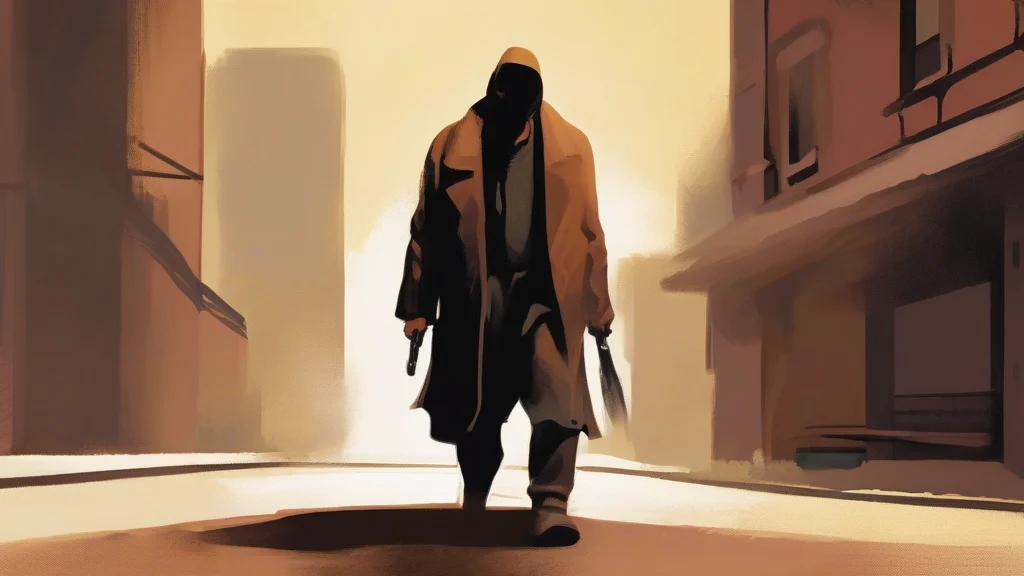
What does ruffian mean?
Ruffian is a disparaging noun for a rough, violent, or unscrupulous person, often one associated with criminal or lawless behavior. In modern English it is chiefly literary, archaic, or deliberately colorful, so calling someone a ruffian can make a statement sound like a judgment from an older period of speech. The word may describe an actual thug or troublemaker, but it can also function more broadly for a cruel, domineering, or morally disreputable figure. In literature, a ruffian may be a stock character: menacing, boastful, and physically imposing, yet sometimes given a vivid personality by the author. Although the modern sense usually stresses menace or villainy, the word's history is less straightforward. Its name is commonly connected with Latin rufus, “red-haired” or “ruddy,” so some etymologies imagine an early label for a red-haired rough fellow. Ruffian remains useful when a writer wants a forceful, historically colored label rather than a clinical description of a violent or unscrupulous person.
nounA rough, violent, or unscrupulous person, especially one associated with menace, lawlessness, or criminal behavior. The term is usually derogatory and is now chiefly literary, archaic, or deliberately forceful.
- A violent, lawless, or menacing person, especially a thug or criminal.
- A broadly unscrupulous, domineering, or morally disreputable person.
"Even the most hardened ruffian flinched when the church bells began to toll."
"The officer warned the ruffian that his threats would only deepen suspicion."
"The novel portrays him as a charming ruffian who gradually reveals his contempt for everyone around him."
The plural is regular, formed by adding -s.
"The ruffians fled through the narrow passages of the old town."
Ruffian may sound like a modern insult, but its proposed Latin ancestor means “red-haired”—so it may have begun as a jab at a ruddy-headed troublemaker.
Reviewed by Deb Chak, Editor. AI-assisted content curated by RJS Tech Solutions LLP.
Where does ruffian come from?
Ruffian entered English in the early 16th century from French ruffien, probably by way of Italian ruffiano. Its ultimate derivation is usually traced to Latin rufus, “red-haired” or “ruddy,” which also underlies rufous and is related to the Latin color family represented by ruby, rubric, and rubicund. The red-hair association is a proposed etymological link rather than a certain explanation of the word's social meaning.
Related word forms
How ruffian is actually used
The word is strongly disparaging and commonly sounds literary, archaic, theatrical, or intentionally harsh. It is not normally used as a neutral occupational or social label.
Easily confused with ruffian
A ruffian is a violent or unscrupulous person, whereas a riffian is a member of the Rif, a mountainous region of Morocco.