
What does rune mean?
A rune is a character from an ancient or medieval alphabet, particularly one used to write Germanic languages. Historically, runes functioned as letters: inscriptions could record names, ownership, memorials, messages, and other information. In modern English, however, the word is also widely used for symbols connected with magic, protection, spells, and divination, especially in literature, games, and visual art. This modern association partly reflects the traditional role of runes in Norse and other Germanic cultures, where written characters could carry religious and ritual significance. The distinction is useful because a rune in an archaeological or linguistic context is not simply a mystical mark; it is also evidence of a writing practice and historical language. The related adjective runic describes inscriptions, letters, or artifacts associated with runes.
nounA rune is a character in an ancient or medieval alphabet, especially one used by Germanic peoples. In modern usage, it can also refer to a symbol associated with magic, protection, or divination.
- A character in an ancient or medieval writing system, especially the alphabets used by Germanic peoples.
- A symbol believed to possess magical, protective, or divinatory significance.
"The museum displayed a stone carved with ancient runes."
"Archaeologists discovered runes carved into a piece of wood dating from the early medieval period."
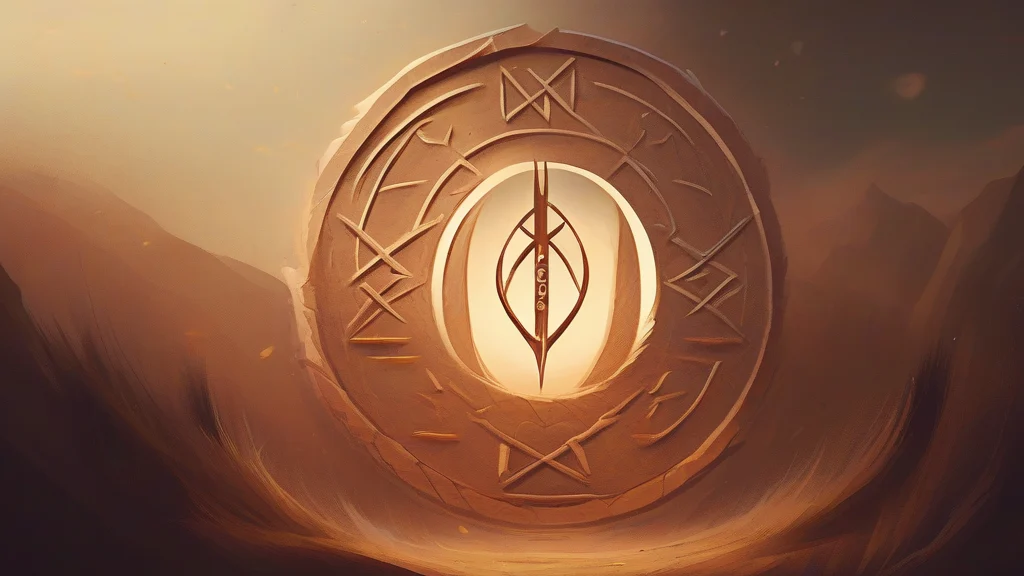
"She traced the glowing runes on the stone doorway, unsure whether they were a warning or an invitation."
The plural is used for individual alphabetic characters, groups of runic symbols, and inscriptions made with runes.
"The scholars spent years deciphering the runes found beneath the church floor."
Runes were not merely magical symbols: they were the letters of an ancient alphabet, linking modern fantasy imagery to a real writing system.
Reviewed by Deb Chak, Editor. AI-assisted content curated by RJS Tech Solutions LLP.
Where does rune come from?
The English word descends from Old English rūn, which referred to a letter or written character and also to secret counsel or mystery. Old English rūn is generally traced to Proto-Germanic *rūnō, a word probably connected with secrecy or concealment. The word is cognate with forms such as Swedish runa, Danish rune, and Icelandic rún. Its later magical associations developed through the religious and ritual uses of runic writing, particularly in Scandinavian and Germanic traditions.
Related word forms
How rune is actually used
The historical sense is scholarly and commonly associated with Germanic writing systems. The magical sense is literary and informal, often appearing in fantasy, occult, and decorative contexts.
Easily confused with rune
A rune is an alphabetic character or magical symbol, while a rune can also refer more broadly to a carved inscription or a set of such characters; in computing and fantasy contexts, the spelling may be confused with the similar word 'ruin'.
A rune is a written character or symbol, whereas a ruin is a damaged building, structure, or remains.