
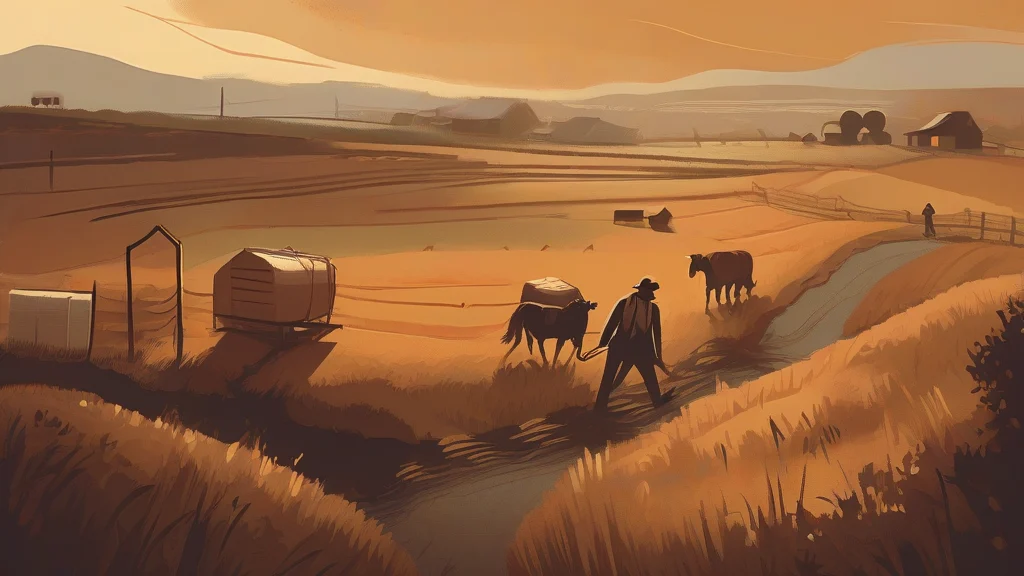
What does ruralism mean?
Ruralism is a noun with two closely related uses. Most commonly, it means the condition of being rural or the distinctive character, culture, and way of life associated with the countryside. It can therefore describe rural society, the persistence of small farming communities, or the relationship between a place and its inhabitants. Less commonly, ruralism refers to a word, phrase, or feature of speech regarded as characteristic of country people. The term is relatively uncommon and usually more analytical than everyday vocabulary. Its connotation depends heavily on context: it may describe rural traditions neutrally, but it can also suggest an exaggerated or outdated stereotype of countryside life. Used carefully, ruralism is useful for discussing how geography shapes language, identity, and community.
nounThe condition, character, or way of life associated with the countryside. It may also refer to a word, phrase, or feature of expression regarded as characteristically rural.
- The state or condition of being rural, especially as a social or cultural condition.
- A word, phrase, or feature of language regarded as characteristic of rural speech.
"Her novel explores ruralism and the changing traditions of isolated farming communities."
"The documentary examines ruralism through the experiences of remote mountain communities."
"The novel's vivid ruralism brings to life both the landscape and its distinctive speech."
Usually used when referring to distinct words, phrases, or features of expression regarded as characteristically rural.
"The author gathered ruralisms from interviews with residents across the county."
Ruralism can name a place, a culture, and even a distinctive way of speaking.
Reviewed by Deb Chak, Editor. AI-assisted content curated by RJS Tech Solutions LLP.
Where does ruralism come from?
Ruralism was formed in English by combining rural with the suffix -ism. Rural entered Middle English from Old French rural, which derived from Latin ruralis, meaning “of the countryside,” ultimately from Latin rus, meaning “country” or “rural estate.” The related English word rustic likewise reflects this Latin origin.
How ruralism is actually used
This is a relatively uncommon and somewhat formal noun. Depending on context, it may be neutral, analytical, or mildly critical, especially when describing speech supposedly typical of the countryside.
Easily confused with ruralism
Ruralism can describe rural life, culture, or speech, whereas rurality chiefly denotes the condition or quality of being rural.
Rural is an adjective meaning “relating to the countryside,” while ruralism is a noun referring to rural character or a rural way of life.