
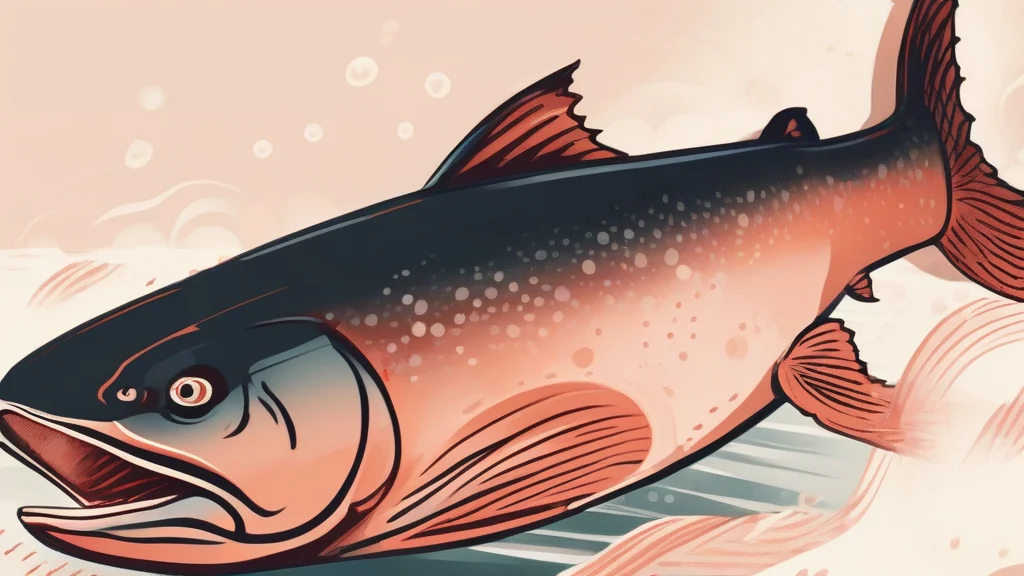
What does salmon mean?
Salmon most commonly names a group of silvery, migratory fish in the salmon family. Species such as Atlantic salmon and Pacific salmon are strongly associated with freshwater rivers, even though they spend much of their adult lives in the ocean. In culinary contexts, salmon refers to the flesh of these fish and appears in dishes including grilled, smoked, and canned preparations. The word can also denote a pinkish-orange color, often called salmon pink, which is traditionally associated with the appearance of salmon flesh. As an adjective, salmon describes objects of that color or foods prepared from the fish. Although the color can include coral, peach, and orange tones, its exact appearance varies with lighting and context. Etymologically, salmon entered English through Old French and Latin. Its long history as a food and its celebrated upstream migrations have made it both a familiar word and a symbol of perseverance, return, and the struggle against strong currents.
Any of various fishes of the salmon family, especially species that migrate from the sea into freshwater to spawn. The noun can also denote a pinkish-orange color.
"Wild salmon returned to the river to spawn."
In menus and food writing, salmon is usually an uncountable mass noun.
Denoting a pinkish-orange color associated with salmon, or occasionally made from salmon.
"The walls were painted in a soft salmon color."
As a color adjective, salmon is more common in fashion, interior design, and food description than in formal technical writing.
The plural salmons is grammatical but uncommon; salmon is often used collectively when referring to the fish or its flesh.
"The lake is home to several salmons."
Many salmon navigate upstream for hundreds of kilometres and return to the river where they were born to spawn.
Reviewed by Deb Chak, Editor. AI-assisted content curated by RJS Tech Solutions LLP.
Where does salmon come from?
English salmon came through Old French salmon from the Latin salmonem, the accusative form of salmo. The Latin word is commonly traced to a Gaulish *salmo- and is often connected with a Proto-Indo-European root referring to a leaping fish. Its equivalents in languages including Italian, Spanish, Portuguese, and German reflect the word's wider Germanic and Romance ancestry.
Related word forms
How salmon is actually used
In food contexts, salmon is commonly used as an uncountable mass noun. In British English, the color is sometimes explicitly called salmon pink, while American usage also frequently uses salmon directly as a color name.
Easily confused with salmon
Trout and salmon both belong to the salmonid family, but trout are generally treated as a distinct group rather than as salmon.