
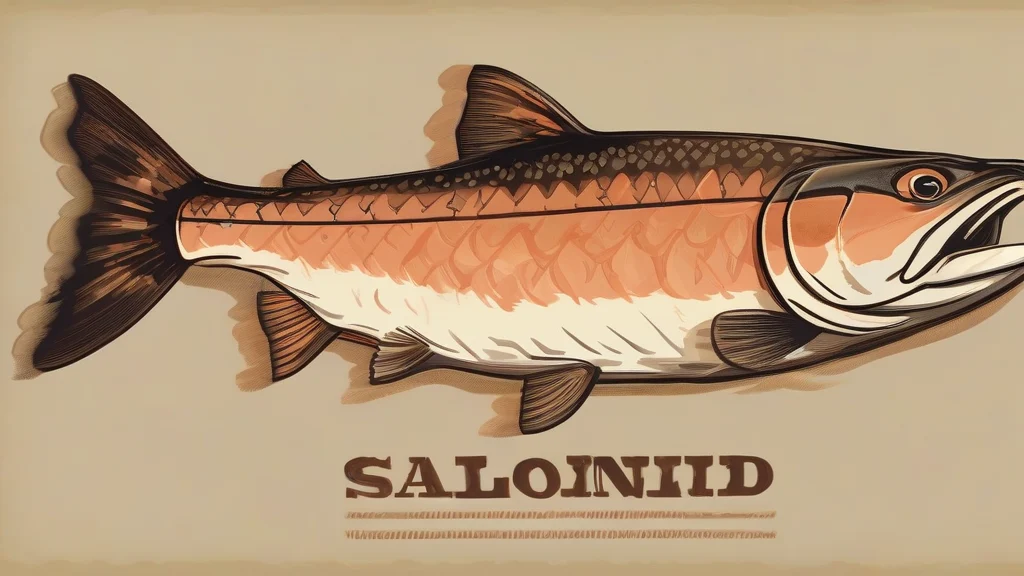
What does salmonid mean?
A salmonid is any fish belonging to the biological family Salmonidae. The family includes salmon, trout, charr, whitefishes, and graylings, so the word is broader than the everyday term “salmon.” In scientific and conservation contexts, it is used as a noun, as in “the salmonid population,” and as an adjective, as in “salmonid habitat” or “salmonid species.” Its use often concerns the identification, biology, management, or conservation of these commercially and ecologically important fishes. Because a salmonid can refer to any member of the family rather than salmon alone, the term is especially useful for discussing rivers, lakes, and fisheries that support several related species. Outside specialist writing, “salmonid” is less common than the everyday names for individual fishes, but it remains standard in zoology, ecology, and resource management.
A fish belonging to the family Salmonidae, including salmon, trout, charr, whitefishes, and graylings.
"Anglers are prohibited from taking salmonid fish in this section of the river."
A taxonomic term used especially in biology, fisheries science, and conservation.
Relating to or characteristic of any member of the fish family Salmonidae.
"The project aims to improve salmonid habitat throughout the watershed."
Common in compound terms such as salmonid species, salmonid habitat, and salmonid fisheries.
Used when referring to multiple fishes or taxonomic groups within the family.
"Several salmonids spawn in the upper reaches of the river."
A salmonid may be a salmon, but it could also be a trout, charr, whitefish, or grayling.
Reviewed by Deb Chak, Editor. AI-assisted content curated by RJS Tech Solutions LLP.
Where does salmonid come from?
The word derives from the scientific family name Salmonidae, which was formed from the genus name Salmon plus the taxonomic suffix -idae, meaning a family. “Salmon” ultimately comes through Old French from Latin salmon, a term of uncertain ultimate origin. The related scientific adjective “salmonoid” was likewise developed from the same base to describe the broader grouping to which salmon belongs.
How salmonid is actually used
The term is chiefly used in biology, fisheries science, conservation, and aquaculture. It is technical but internationally understood.
Easily confused with salmonid
Salmon denotes members of one commonly recognized group, whereas salmonid is a broader taxonomic term covering salmon and several related fishes such as trout and charr.