
What does saucepan mean?
A saucepan is a deep, usually metal cooking pan with a long handle, traditionally used for making sauces and for simmering foods such as stews, soups, and pasta. In everyday English, the word is more specific than “pan”: it suggests a vessel broad enough to hold liquid and generally deeper than a frying pan, though regional and household usage varies. A saucepan may be made from stainless steel, aluminum, copper, or enamel-coated cast iron, and it is often paired with a matching lid. The term is also used more narrowly in recipes and kitchen instructions, where “saucepan” identifies the pan in which a sauce, melted mixture, or other liquid is prepared. Unlike a frying pan, which is designed primarily for shallow frying, a saucepan is better suited to stirring, boiling, and reducing liquids. Its long handle and useful capacity make it a basic tool for sauces, grains, vegetables, and one-pot meals. The word is fully standard in cooking, recipe writing, and household instruction.
nounA saucepan is a deep cooking pan, usually with a long handle, used for making sauces and for simmering or boiling foods. It is generally deeper and less suited to shallow frying than a frying pan.
- A deep cooking pan with a long handle, used for making sauces and simmering foods.
"Simmer the sauce in a saucepan until it thickens."
"The recipe calls for a medium saucepan and a wooden spoon."
"She lifted the lid from the saucepan and checked whether the onions were tender."
The regular plural is “saucepans.”
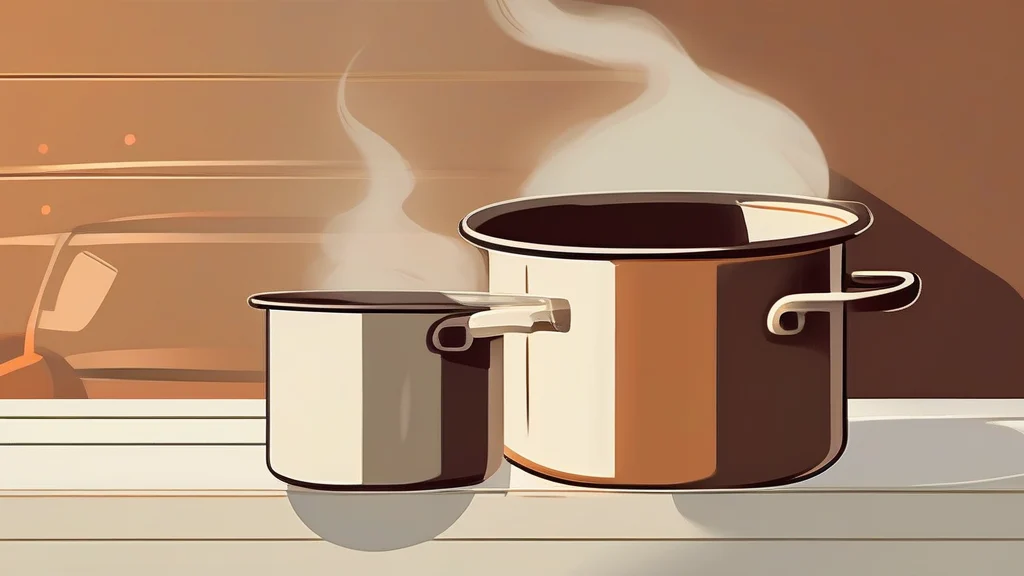
"Two saucepans sit on the stove beside the prepared ingredients."
A saucepan is named for its original job: holding the liquid that becomes sauce, while also becoming a dependable vessel for soups, stews, grains, and countless one-pot meals.
Reviewed by Deb Chak, Editor. AI-assisted content curated by RJS Tech Solutions LLP.
Where does saucepan come from?
Saucepan is an English compound formed from “sauce” and “pan,” both of which were established in English before the compound appeared. The word has been used since the early modern period, reflecting the longstanding practice of preparing sauces and other liquid dishes in a dedicated cooking vessel. “Sauce” comes through Old French from Latin, while “pan” has a separate historical origin but forms the vessel-denoting element of the compound.
Related word forms
How saucepan is actually used
In both British and American English, saucepan usually denotes a deeper pan suited to liquid-based cooking. The term is standard in household, recipe, and culinary contexts; frying pan and skillet refer to a different kind of cookware. Regional and household preferences can vary in how broadly the word is used, but the basic distinction remains.
Easily confused with saucepan
A saucepan is a relatively deep pan used for sauces, boiling, and simmering, whereas a frying pan is a shallow pan designed primarily for frying food in a thin layer of oil or butter.