
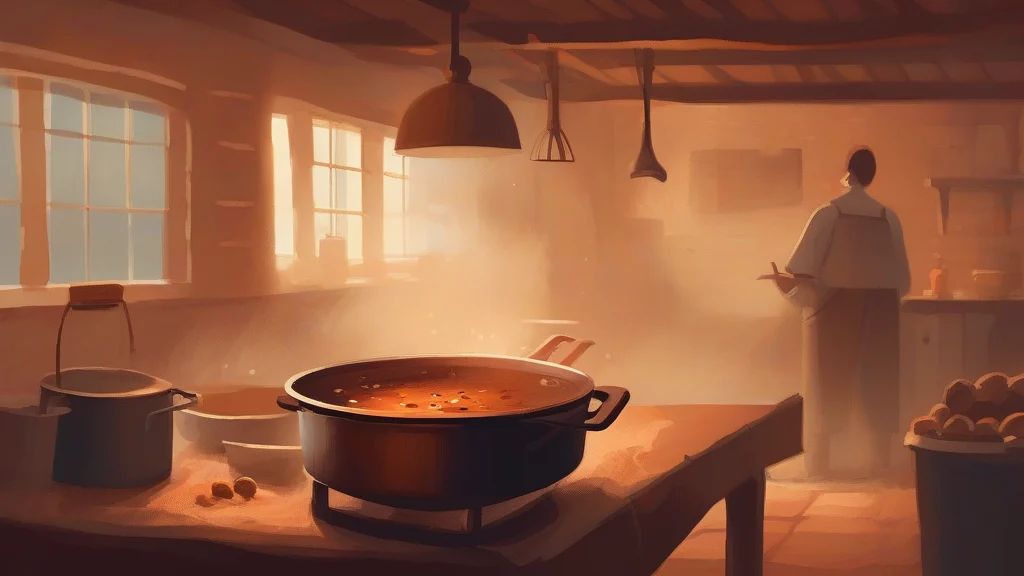
What does stewpan mean?
A stewpan is a deep cooking vessel, usually made of metal and fitted with a lid, that is used to make stews and other dishes requiring long, slow cooking. It is especially useful for combining meat or vegetables with liquid and allowing the ingredients to become tender without excessive boiling. In British English, the term is familiar and practical, distinguishing a stewpan from a smaller saucepan. In American English, cooks may more often say saucepan, Dutch oven, or simply pan. Although a stewpan can also be used for soups, sauces, and braised dishes, its name emphasizes its association with stew. Its straightforward form and substantial capacity make it particularly useful for preparing meals intended to serve several people.
nounA deep cooking pan with a lid, used for making stews and other slowly cooked dishes.
- A deep pan used for preparing stews or similar dishes cooked slowly over a long period.
"She simmered the onions and beef in a heavy stewpan until the meat was tender."
"The recipe calls for a heavy stewpan with a tight-fitting lid."
"He transferred the vegetables from the stewpan into a serving bowl."
The standard plural is stewpans.
"Several large stewpans were set out before the meal."
A stewpan is the kitchen workhorse for dishes that ask for patience: heat, time, and a sturdy vessel.
Reviewed by Deb Chak, Editor. AI-assisted content curated by RJS Tech Solutions LLP.
Where does stewpan come from?
The word is a compound formed from stew and pan. The cooking sense of stew developed through Middle English usage, while pan comes through Old French from Latin patina, originally a shallow dish or pan. The compound stewpan became established in English as a name for a vessel suitable for preparing stews.
How stewpan is actually used
The word is most common in British English. In American English, a saucepan or Dutch oven may be preferred depending on the recipe, although stewpan is understood and sometimes used.
Easily confused with stewpan
A saucepan is generally smaller and shallower, while a stewpan is typically deeper and designed for long, slow cooking.