
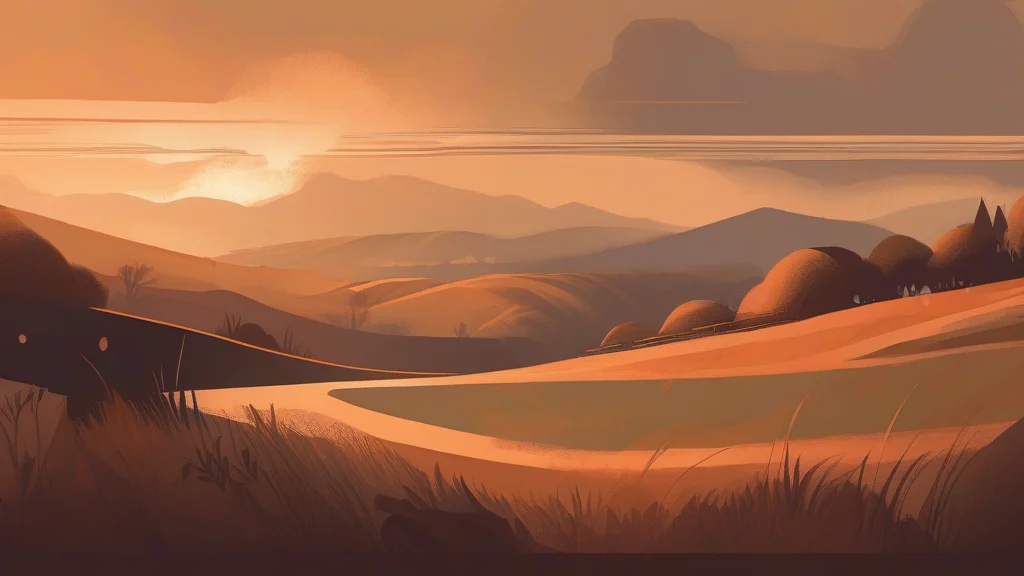
What does scenery mean?
Scenery means the visible appearance of a place, especially the combination of natural landscape, architecture, and other features that gives a location its character. The word is especially associated with attractive or distinctive outdoor views, as in “mountain scenery,” but it can refer to any recognizable setting. In theatre and film, scenery has a more technical meaning: the painted or constructed backdrops and props that establish the location of a scene. The word is generally uncountable in everyday use, while the plural “scenries” appears occasionally when separate views or areas of scenery are being discussed. Although its meaning differs by context, scenery always concerns what is seen and how a place or performance is visually represented.
nounThe visible features of a place, especially its natural landscape or distinctive buildings. In theatre, scenery refers to the painted or constructed backdrops and props that represent the setting of a scene.
- The visible features of a place, especially its natural landscape, buildings, and other distinctive characteristics.
- The painted, printed, or constructed backdrops and props used to represent the setting of a theatrical performance.
"The village is surrounded by some of the most beautiful scenery in the region."
"We stopped at the lookout to admire the scenery below."
"The play's minimalist scenery focused attention on the actors."
Usually avoided because scenery is generally treated as an uncountable noun; use “scenery” or refer to separate areas or views of scenery instead.
"The region is known for its varied sceneries."
From the stage to the great outdoors: “scenery” once described the sets of a play and still names the visual character of a landscape.
Reviewed by Deb Chak, Editor. AI-assisted content curated by RJS Tech Solutions LLP.
Where does scenery come from?
Scenery was formed in English from “scene” with the suffix “-ery,” a development that reflects its association with the visual setting of a stage. “Scene” comes through French from Latin scenia, a plural form of Greek skēnē, meaning a stage or raised platform used in performance. Related English words include “scenic,” “scenography,” and “scenario,” all of which share this root in the history of stage and dramatic representation.
How scenery is actually used
In general use, scenery is usually treated as an uncountable mass noun, although “scenries” is a recognized plural in some dictionaries and is occasionally used for separate views or stretches of landscape. In theatre, scenery commonly functions as an uncountable noun.
Easily confused with scenery
Scenery refers to the visible features or setting of a place or performance, whereas a scenario is a hypothetical description of events and their possible consequences.