What does scenography mean?
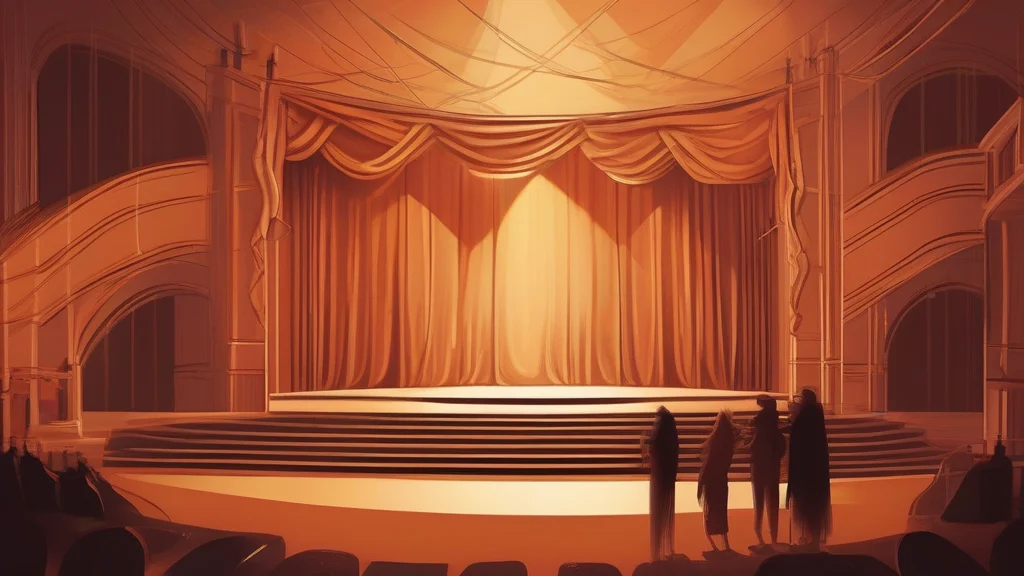
Scenography is the art of designing and arranging scenery for theatrical performances, encompassing the creation of three-dimensional sets, lighting, and special effects. It plays a crucial role in enhancing the visual and emotional impact of a performance, transporting audiences to new environments and atmospheres. Scenographers use a range of techniques, including set design, lighting design, and special effects, to create immersive and engaging experiences. The term scenography is derived from the Greek words 'scene' and 'graphy', reflecting its focus on the visual representation of a performance's setting and atmosphere. Effective scenography can elevate a performance, drawing audiences into the world of the play or production.
nounThe art of designing and arranging scenery for theatrical performances, including the creation of three-dimensional sets, lighting, and special effects.
- The art of designing and arranging scenery for theatrical performances.
- The application of scenography principles in other visual arts or contexts.
"The scenography of the play was breathtaking, with intricate sets and clever use of lighting."
"The scenography of the opera was stunning, with elaborate sets and costumes."
"The artist's use of scenography in her installation created an immersive experience for viewers."
Reviewed by Deb Chak, Editor. AI-assisted content curated by RJS Tech Solutions LLP.
Etymology of scenography
The term scenography originates from the Greek words 'skene' (scene) and 'graphia' (writing or drawing). It has evolved to encompass the art of designing and arranging scenery for theatrical performances, including the creation of three-dimensional sets, lighting, and special effects.
How scenography is actually used
Scenography is often used in the context of theater, opera, and dance performances, but its principles can also be applied to other visual arts and installations.