
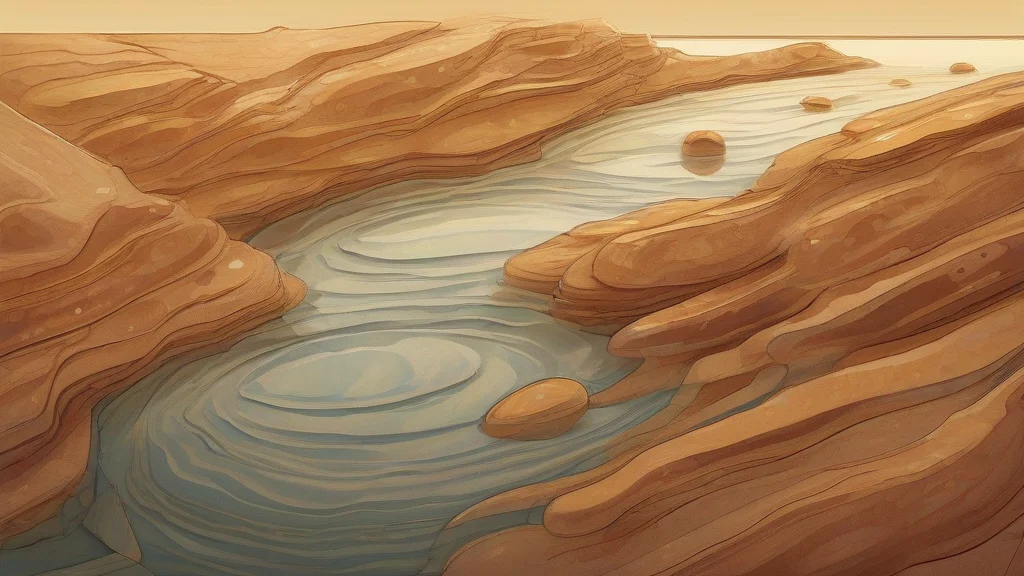
What does sedimentation mean?
Sedimentation is the process by which solid particles settle out of a fluid, especially water, and accumulate as sediment. It is important in geology, where the deposited layers of particles can become sedimentary rock; in environmental science, where it affects riverbeds, reservoirs, and coastal habitats; and in chemistry and engineering, where suspended materials must separate from liquids. The word also has a limited figurative use for the gradual accumulation or settling of ideas, events, or other abstract matters. Sedimentation is related to deposition, but it focuses more specifically on the settling process rather than the broader act of depositing material. Although usually used as an uncountable noun, “sedimentations” is the standard plural form and appears occasionally when separate accumulation processes or deposits are being discussed.
nounSedimentation is the process by which solid particles settle out of a fluid, such as water, and form a layer or deposit. In geology and related sciences, it also refers to the accumulation of such deposited material.
- The settling of suspended solid particles in a fluid, resulting in a deposit.
- The gradual accumulation or deposition of material, especially sediment.
"After the storm, sedimentation in the reservoir increased the level of silt on its floor."
"Sedimentation in the harbor has gradually reduced its capacity to receive large vessels."
"The gradual sedimentation of ideas gave the movement a distinctly historical character."
The plural is uncommon because sedimentation is normally treated as an uncountable process; it is used when referring to separate deposits or instances of accumulation.
"The two sedimentations produced visibly different layers of silt."
Sedimentation is nature's slow filing system: layers of particles accumulate over time, sometimes preserving a record of ancient environments in sedimentary rock.
Reviewed by Deb Chak, Editor. AI-assisted content curated by RJS Tech Solutions LLP.
Where does sedimentation come from?
The word derives from Latin sedimentum, meaning a settling or deposit, from sedere, “to sit,” together with the suffix -mentum. The English form sedimentation was formed with the suffix -ation, meaning the process or action of sedimentation. Its relatives include sedimentary, from the same Latin source, and cognates such as sedentary and sedate, which also derive from the Latin root associated with sitting.
How sedimentation is actually used
Sedimentation is chiefly formal and technical, especially in geology, chemistry, environmental science, and civil engineering. Figurative use is possible but is less common and often conveys the gradual accumulation or settling of something over time.
Easily confused with sedimentation
Deposition refers broadly to the laying down or depositing of material, whereas sedimentation specifically emphasizes particles settling out of a fluid or other medium.