
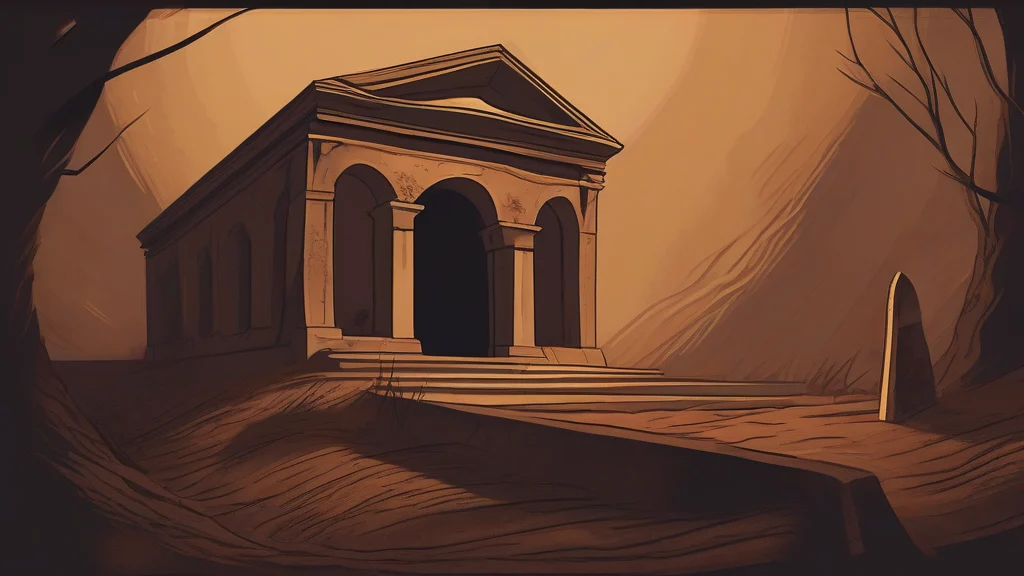
What does sepulchral mean?
Sepulchral is a formal adjective meaning “relating to burial or a tomb,” and it is often used to evoke a funereal or deathly atmosphere. The word can describe physical features such as a sepulchral vault or stone, but it is also frequently figurative, as when a voice is described as sepulchral or a landscape as having sepulchral gloom. Its associations with graves, funerals, mourning, and decay make it more evocative and somber than simply “dark” or “gloomy.” The term appears especially in literary, architectural, and descriptive writing. Because it carries strong connotations of death and solemnity, it is usually reserved for deliberately serious or atmospheric contexts rather than ordinary descriptions of sadness.
adjectiveRelating to burial or a tomb. Characteristically gloomy, solemn, or associated with death.
- Relating to burial, a tomb, or a place of burial.
- Solemn, mournful, or ominously gloomy, especially in an atmosphere associated with death.
"The sepulchral stones cast long shadows across the cemetery."
"The crypt had a sepulchral chill that made the visitors fall silent."
"Her sepulchral voice and grave manner made every conversation sound like a funeral address."
Sepulchral is the literary word for the heavy silence that seems to settle around a tomb.
Reviewed by Deb Chak, Editor. AI-assisted content curated by RJS Tech Solutions LLP.
Where does sepulchral come from?
Sepulchral comes from Latin sepulcralis, an adjective meaning “of a tomb” or “relating to burial.” It was formed from sepulcrum, meaning “burial place” or “tomb,” which also developed into English sepulchre and sepulcher. Latin sepulcrum is related to sepelire, “to bury,” the source of the English word sepulture. These forms reflect a long-established Latin vocabulary for graves, burial, and funeral rites.
Related word forms
How sepulchral is actually used
Formal and literary. It commonly conveys an atmosphere of death, mourning, antiquity, or extreme solemnity, and may be used figuratively for voices, sounds, colors, or places that seem gloomy or ominous.
Easily confused with sepulchral
Sepulchral describes something associated with burial, death, or funeral solemnity, whereas sepulchral is not normally confused with a similarly spelled word in standard modern English.