
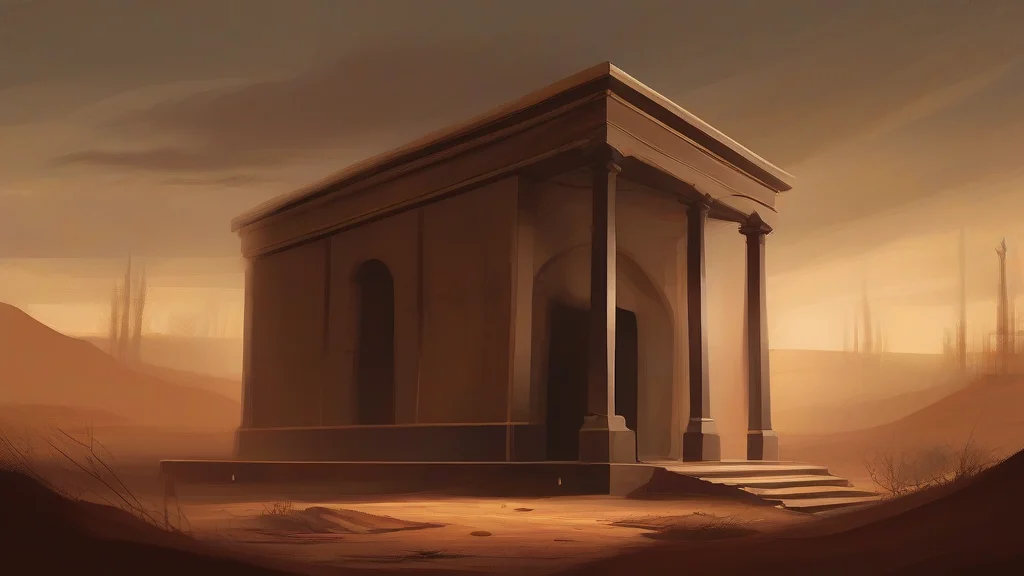
What does sepulchre mean?
Sepulchre is a formal word for a tomb or burial place, particularly one associated with a notable person, a religious building, or an elaborate stone structure. In modern English it is more literary and solemn than the everyday terms grave and tomb, and it often suggests a burial chamber, vault, or monument rather than a simple grave. The noun is still used in descriptions of historical architecture, archaeology, and religious sites; the Church of the Holy Sepulchre in Jerusalem is its best-known example. The verb, meaning to place in a tomb or entomb, survives mainly in archaic, poetic, and ceremonial contexts. Sepulchre is related to sepulchral, as in sepulchral monument, which describes something associated with burial or suggestive of death. Although the less familiar spelling sepulcher is also encountered, sepulchre is the established standard spelling in British English and is also widely used in American English.
A tomb, burial chamber, or monument in which a body is interred.
"A carved sepulchre stands against the northern wall of the church."
Formal and literary; especially common in historical, archaeological, religious, and commemorative contexts.
To place a body in a tomb or burial place; to entomb.
"They sepulchred the queen in the royal vault beneath the abbey."
Now chiefly archaic or literary and encountered much less often than the noun.
The regular plural is sepulchres, though the word is most often found in singular form in formal and literary contexts.
"The historians documented several sepulchres dating from the medieval period."
The Holy Sepulchre in Jerusalem preserves one of Christianity's most enduring traditions: that it marks the burial place of Jesus.
Reviewed by Deb Chak, Editor. AI-assisted content curated by RJS Tech Solutions LLP.
Where does sepulchre come from?
The word entered English through Old French sepulchre, a form of the Latin sepulcrum meaning a tomb or burial place. Latin sepulcrum was borrowed from Greek sepulchron, a word connected with sepein, meaning to bury. The same roots survive in English derivatives such as sepulchral and in the Latin form sepulcrum, while sepulcher represents a less common English spelling variant.
Related word forms
How sepulchre is actually used
As a noun, sepulchre is formal and literary, with stronger associations than tomb for an imposing or historically important burial structure. As a verb, it is now chiefly archaic or literary.
Easily confused with sepulchre
Sepulcher is a less common spelling of sepulchre, especially in American English; both words have the same meaning.