
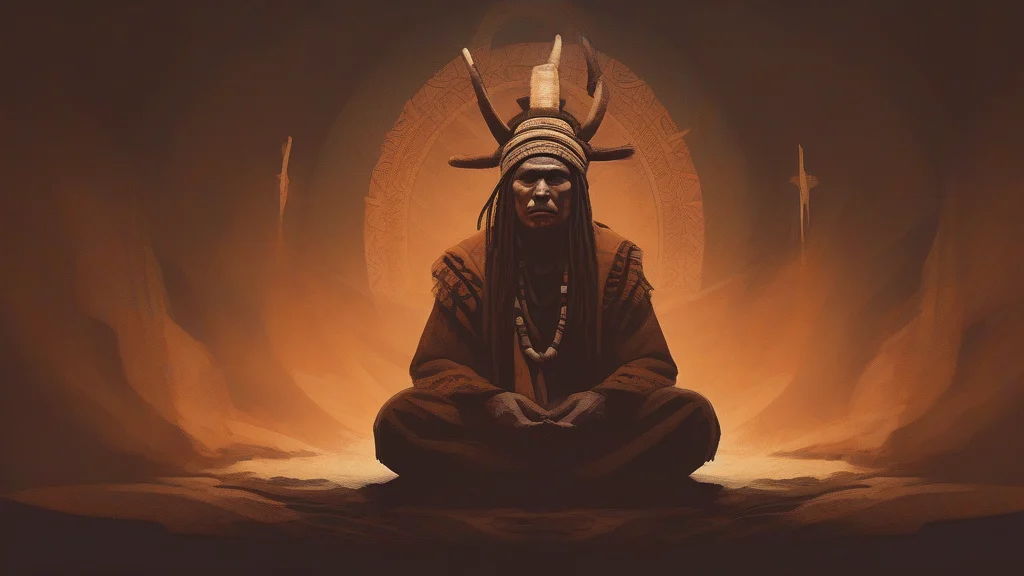
What does shaman mean?
A shaman is, in the strict historical sense, a religious practitioner who serves as an intermediary between the human world and spirits or other supernatural beings. The English word came through Russian and ultimately from a Tungusic language of northern Eurasia; it is not a generic name for every kind of witch, healer, or magician. In contemporary English, however, "shaman" is often used more loosely for a spiritual healer, diviner, wilderness guide, or mentor associated with Indigenous traditions or a stylized idea of pagan spirituality. Such applications can flatten distinct local roles into one exotic label, and terms such as "witch doctor" may sound archaic or derogatory. Used carefully, "shaman" is valuable for naming a particular tradition of spiritual authority and for discussing how ideas of healing, ritual, and nature are represented. It is also a reminder that English vocabulary often carries the history of cross-cultural borrowing.
nounA religious practitioner who acts as an intermediary between the human and supernatural worlds, especially within a northern Eurasian animistic tradition. In modern usage, the word can also refer more broadly to a spiritual healer, diviner, or guide.
- A religious practitioner in a northern Eurasian animistic tradition, traditionally believed to communicate with spirits and mediate between supernatural and human realms.
- In modern extended usage, a spiritual healer, diviner, mentor, or wilderness guide perceived as possessing unusual spiritual or occult abilities.
"A shaman in the village performed the healing ritual beside the river."
"A shaman in the village performed the healing ritual beside the river."
"In the novel, the shaman serves as both healer and spiritual guide to the clan."
The standard plural is "shamans," with the final s pronounced in normal English speech.
"The accounts describe shamans who served as healers, ritual specialists, and spiritual guides."
The word sounds universal, but it entered English through Russian and carries a history of cultural borrowing that scholars still debate.
Reviewed by Deb Chak, Editor. AI-assisted content curated by RJS Tech Solutions LLP.
Where does shaman come from?
The English noun entered through Russian шама́н (šamán) in the early 17th century. Russian borrowed the term from a Tungusic language, usually identified as Evenki, where šaman denoted a practitioner with spiritual powers. The word's deeper etymology has been debated, although its transmission through Russian into European languages is well established.
Related word forms
How shaman is actually used
Historically, the word refers to particular roles within northern Eurasian traditions and should not be treated as a universal label for every kind of magician, healer, or religious leader. Its loose modern use may flatten culturally distinct roles, while the synonym "witch doctor" can sound archaic or derogatory.
Easily confused with shaman
A shaman is a spiritual or religious practitioner, whereas a sham is a false substitute or something intended to deceive.