
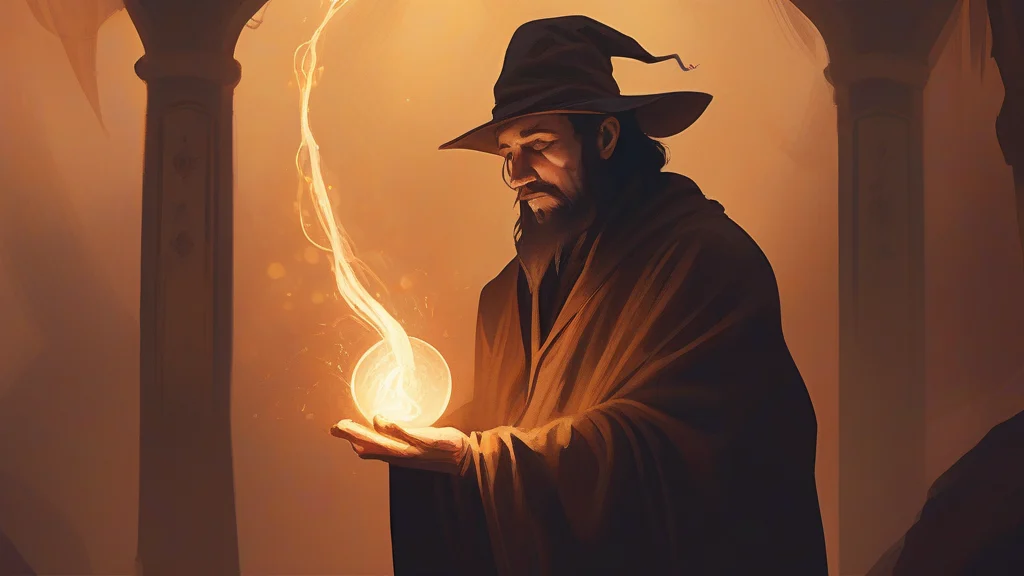
What does sorcerer mean?
A sorcerer is a man who uses magic or supernatural powers. The word appears especially in folklore, fantasy literature, films, games, and other stories involving witches, wizards, curses, and enchanted objects. Although the term can simply mean a male practitioner of magic, it often carries a darker atmosphere than wizard, suggesting secrecy, danger, or older and less familiar forms of magic. In ordinary conversation, sorcerer is uncommon and sounds traditional or deliberately dramatic rather than neutral. Its historical associations with sorcery help explain why it is often used for an ominous figure—an evil enchantment, a mysterious mentor, or a character whose powers come at a price. The word is also a convenient gender-marked counterpart to the more general term practitioner of magic, while the related adjective sorcerous can describe acts, spells, or influences connected with sorcery.
nounA sorcerer is a man believed to use magic or supernatural powers, especially in stories, folklore, and fantasy. The term can also refer generally to a practitioner of sorcery.
- A man who practices sorcery or uses supernatural powers, especially in folklore, mythology, literature, and fantasy.
- A person associated with dark or threatening magic, particularly in popular culture.
"The village feared the mysterious sorcerer who lived beyond the forest."
"The sorcerer challenged the young apprentice to find the hidden spell."
"In the novel, an old sorcerer warns the heroes about the creature's return."
The regular plural is used for multiple male practitioners of magic or supernatural powers.
"Sorcerers from rival kingdoms gathered at the council."
A sorcerer is the old-fashioned name for a male magic-user—and it carries more shadow than sparkle.
Reviewed by Deb Chak, Editor. AI-assisted content curated by RJS Tech Solutions LLP.
Where does sorcerer come from?
Sorcerer entered English through Anglo-French and Old French forms related to sorcery and sorcier, a word meaning a practitioner of magic or divination. These forms ultimately drew on Latin roots associated with sorting or casting lots, especially in the sense of divination by lot; English later developed the more familiar semantic field of sorcery. The related English words sorcery, sorcerous, and sortilege reflect this shared historical vocabulary, with sortilege now chiefly a historical term for divination by casting lots.
Related word forms
How sorcerer is actually used
The word is literary and strongly associated with folklore, fantasy, and archaic or ominous settings. In modern usage it is often more characteristically male than the more general word wizard, and it may suggest black magic or danger, though that connotation is not universal.
Easily confused with sorcerer
A wizard is typically a male magical practitioner, especially in fantasy and folklore, while a sorcerer is more specifically associated with sorcery and often has a darker or more supernatural connotation.
A warlock is traditionally a male witch or practitioner of harmful magic, whereas a sorcerer is a broader term for someone who uses magic or sorcery and is not necessarily portrayed as evil.