
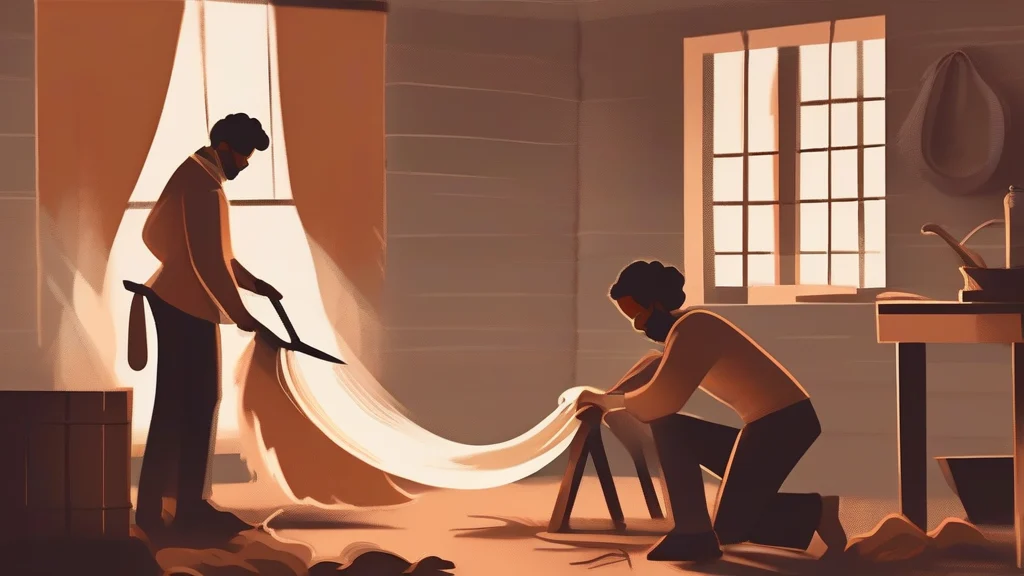
What does shearing mean?
Shearing is the process of cutting off wool or hair, especially from sheep, and the word can also function as a verb describing that action. Shears or electric clippers are commonly used, and the removed fleece is collected for processing into wool. The term has a particularly strong association with sheep husbandry and the seasonal routine of preparing animals for warmer weather, although shearing is also used for trimming other animals' coats. In compound expressions such as sheep shearing, shearing shed, and shearing season, it refers to a practical agricultural activity or the equipment and setting associated with it. The word can describe the completed act as well as the process, and in some contexts it refers to the fleece itself. Though its meaning is straightforward, shearing links an ordinary farm task with the much larger history of wool production and textile manufacture.
The act or process of cutting off wool or hair, especially from sheep, with shears or clippers. It can also refer to the fleece removed in the process.
"Shearing the sheep requires a secure pen and a steady hand."
The plural shearings is uncommon in general use but can refer to separate instances or events of shearing.
Cutting or trimming wool, hair, or fur with shears or clippers.
"The farmer was shearing a ewe in the shearing shed."
This is a present-participle form of shear, commonly used as an attributive modifier, as in shearing equipment.
Used mainly for separate acts, events, or results of shearing; general references usually use the singular.
"The sheep were divided into groups for the spring shearings."
Sheep are usually shorn in one continuous fleece, leaving a surprisingly large and versatile layer of wool.
Reviewed by Deb Chak, Editor. AI-assisted content curated by RJS Tech Solutions LLP.
Where does shearing come from?
Shearing developed from the verb shear, which comes from Old English sceeran, meaning “to cut” or “cleave,” and was later Middle English sheren. The Old English verb belongs to Proto-Germanic *sheraną, also reflected in related forms such as Old Norse skera and German scheren. English words including scar, score, and scare are commonly traced to the same broader Indo-European root *sker-, associated with cutting or tearing, although their modern meanings have developed independently.
Related word forms
How shearing is actually used
In its usual sense, shearing is practical and literal. It is common in agricultural, textile, and craft contexts, while figurative uses are uncommon and context-dependent.
Easily confused with shearing
Shearing means cutting off wool or hair, whereas sharing means dividing something with others or giving someone access to it.