
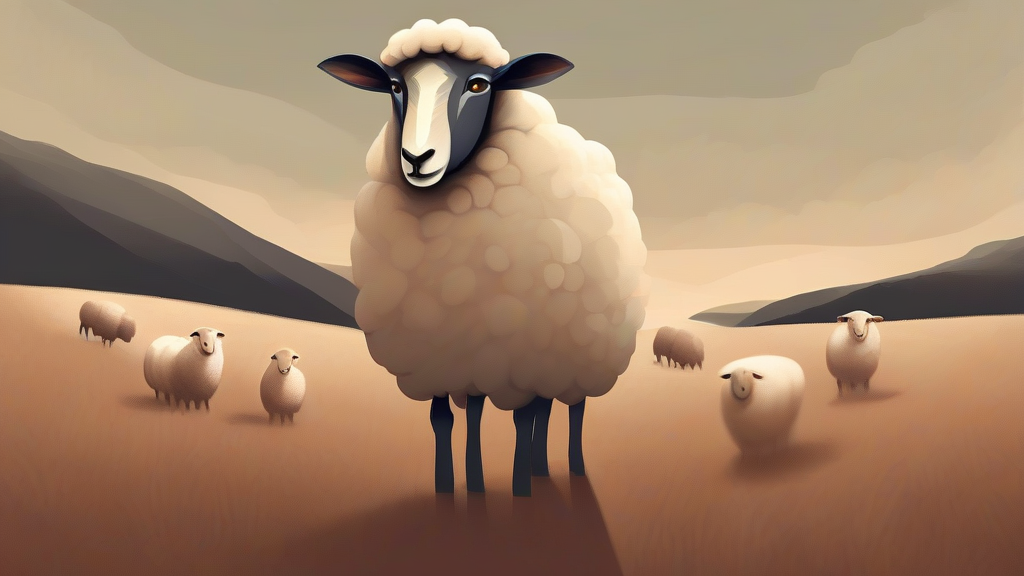
What does sheeplike mean?
Sheeplike means resembling a sheep or, more commonly, behaving in a meek, timid, and submissive manner. The word evokes the traditional image of sheep following one another and remaining compliant under a shepherd's direction. It is therefore used critically of people or groups who appear reluctant to question authority, assert themselves, or act independently. Although the literal sense can refer to physical appearance, the figurative sense is much more frequent in everyday use. Sheeplike is stronger and more derogatory than words such as gentle or compliant because it suggests passivity and lack of judgment rather than a neutral willingness to cooperate. The compound is formed directly from the familiar noun sheep and the suffix-like element like, making its meaning both transparent and memorable.
adjectiveResembling a sheep, especially in being meek, timid, submissive, or easily directed by others.
- Meek, timid, submissive, or easily controlled by others.
- Resembling a sheep in appearance or manner.
"The politician dismissed the protesters as a sheeplike crowd whose members would never challenge his decisions."
"Years of unchallenged authority had made him increasingly sheeplike and unwilling to consider dissent."
"The narrow path became indistinct where the landscape was low and sheeplike beneath the overcast sky."
Calling someone sheeplike turns an ordinary farm animal into a sharp metaphor for someone who follows without resistance.
Reviewed by Deb Chak, Editor. AI-assisted content curated by RJS Tech Solutions LLP.
Where does sheeplike come from?
The word is a transparent compound of sheep and like, meaning “resembling a sheep.” Its central element, sheep, comes from Old English sceap, while the second element belongs to a wider Germanic family of words meaning “similar.” The figurative association with meekness and submissiveness developed naturally from the behavior traditionally attributed to sheep.
Related word forms
How sheeplike is actually used
The figurative sense is generally critical and may be insulting when directed at a person or group. It often implies an excessive lack of independence or resistance rather than simple gentleness.
Easily confused with sheeplike
Sheeplike describes meekness, submissiveness, or sheep-like appearance, whereas sheepish usually means embarrassed or awkwardly self-conscious.