
What does shepherdess mean?
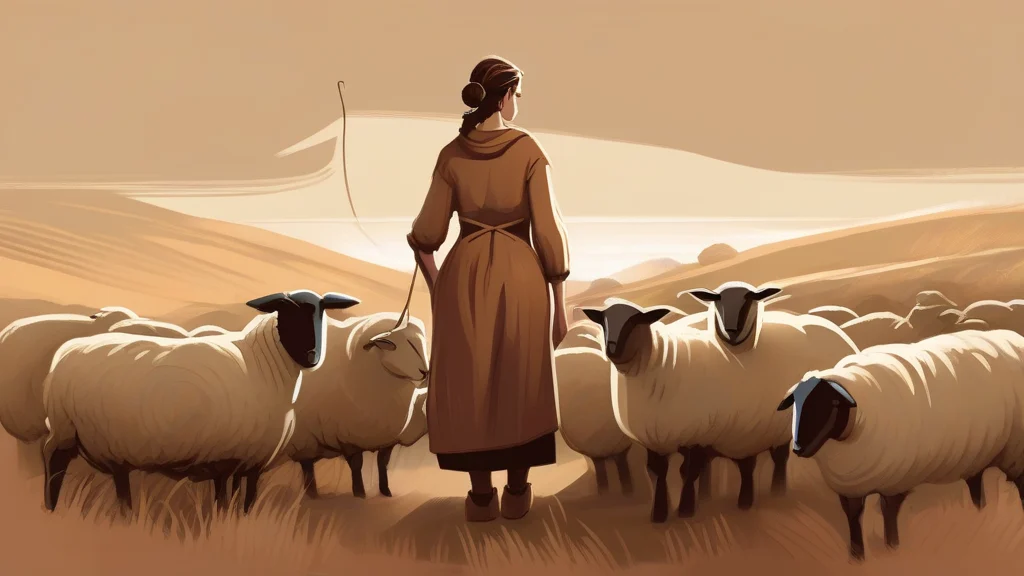
A shepherdess is a woman who looks after sheep, guiding them to pasture, protecting them from danger, and managing the flock's movements. The word comes from shepherd with the feminine suffix -ess, although shepherd is now widely used for people of any gender. In older literature, pastoral life, and folklore, a shepherdess often appears as a rural figure associated with open country, animals, and a close relationship with nature. The term remains clear and perfectly acceptable today, but it can sound more traditional than simply saying shepherd. Its distinctive history is also a reminder that English once marked grammatical gender explicitly, while present-day usage increasingly favors gender-neutral forms when the particular gender is not important.
nounA shepherdess is a woman who tends and cares for sheep, especially as a paid occupation or in the traditional pastoral role of shepherding.
- A woman who tends, guards, or manages sheep.
"The shepherdess guided the flock across the high meadow."
"The shepherdess counted the sheep before the storm reached the valley."
"In the pastoral tradition, the shepherdess was both a caretaker and a familiar figure in local folklore."
The standard plural of shepherdess is shepherdesses, with the suffix pronounced /ɪz/.
"The shepherdesses led their flocks toward the lower pastures."
From shepherd plus the feminine suffix -ess, shepherdess preserves the historic image of a woman guiding a flock over open country.
Reviewed by Deb Chak, Editor. AI-assisted content curated by RJS Tech Solutions LLP.
Where does shepherdess come from?
Shepherdess is formed from shepherd by adding the feminine suffix -ess. Shepherd itself comes from Old English sceap, meaning “sheep,” and hierde, meaning “herder” or “one who herds,” so the compound originally referred to a person who cared for sheep. The form shepherdess developed during the early modern period as a specifically feminine counterpart to shepherd, and it is parallel to other English occupational terms ending in -ess.
How shepherdess is actually used
The word is standard and neutral, but it has a somewhat traditional or literary tone. In modern occupational contexts, shepherd is often used regardless of gender, while shepherdess can emphasize the woman's role.