
What does shoehorn mean?
Shoehorn is a word that combines a literal object with a useful figurative meaning. As a noun, a shoehorn is a curved tool, traditionally made from horn, that helps slide a shoe onto the foot. As a verb, to shoehorn something into a place or situation means to force it into a space that is too small, too crowded, or otherwise unsuitable. The expression is especially common when discussing writing, editing, meetings, schedules, and travel: a writer may shoehorn several arguments into a short article, or a planner may shoehorn too many activities into a day. The verb conveys compression and strain rather than smooth accommodation. It is informal but widely understood in British and American English, and its vivid image of forcing something into a narrow opening makes it especially effective for describing artificial or overly compressed arrangements.
To force or fit something into a cramped, awkward, or otherwise unsuitable space, arrangement, or category.
"The committee tried to shoehorn another topic into the meeting."
Informal and figurative; commonly transitive, with an object and often a prepositional phrase such as “into.”
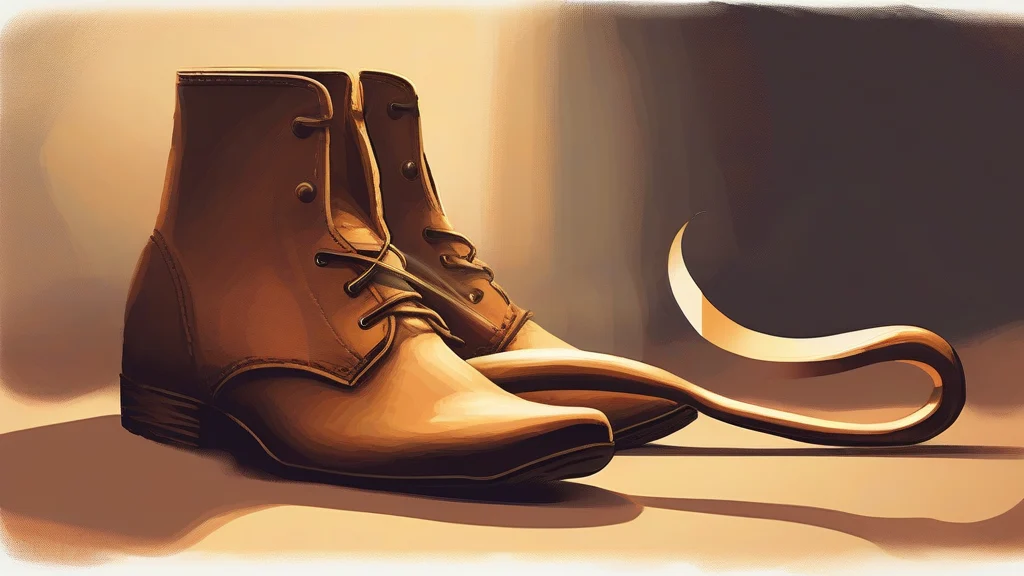
A curved, horn-shaped implement traditionally used to help put on shoes.
"He slipped the shoehorn under the heel of the boot."
Now somewhat dated as a physical object in many regions, but commonly understood and frequently used in figurative expressions.
The plural is used for multiple shoehorns or, figuratively, for separate instances of the tool or the practice of forcing something into a cramped space.
"The workshop kept a box full of old shoehorns near the entrance."
A shoehorn began as a practical aid for putting on shoes, but the modern verb makes it a vivid metaphor for squeezing ideas, people, or information into spaces that cannot comfortably hold them.
Reviewed by Deb Chak, Editor. AI-assisted content curated by RJS Tech Solutions LLP.
Where does shoehorn come from?
The word is a compound of “shoe” and “horn,” originally referring to a horn-shaped implement used to assist with putting on shoes. The compound has been in use since at least the early modern period, and the verb meaning “to force into a narrow space” developed by analogy with the difficulty of pushing one’s foot into a shoe. The two components, “shoe” and “horn,” are historically separate words brought together through their practical use in the tool.
Related word forms
How shoehorn is actually used
The figurative verb is informal and usually implies that the result is strained or awkward. In British and American English, it is typically transitive and takes an object, though it can also be followed by a prepositional phrase, as in “shoehorn it into.” The noun is now less common because most people use a shoehorn or another shoe aid.
Easily confused with shoehorn
As a noun, shoehorn refers to a tool used to help put on shoes, while the verb means to force something into an inadequate space or an unsuitable arrangement.