
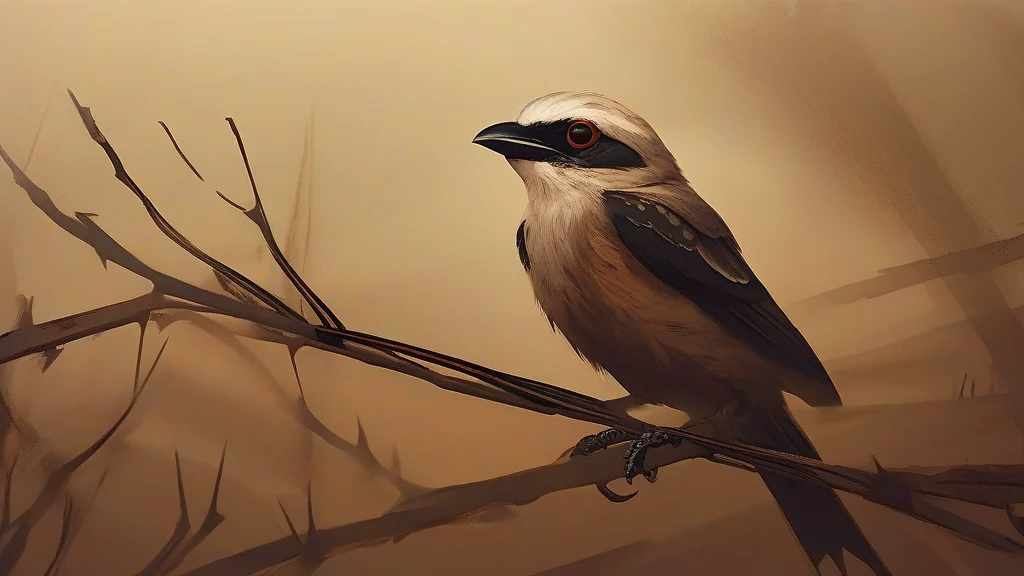
What does shrike mean?
A shrike is a carnivorous passerine bird recognized by its hooked bill, strong feet, and predatory behavior. Rather than tearing food apart with its feet, some shrikes catch prey and impale it on thorns, wire, or other pointed surfaces, which may keep the catch secure and can make it easier to handle. This behavior has inspired the common name butcherbird for members of the group. The best-known European species include the grey shrike and red-backed shrike, while several closely related species occur in North America. In ordinary usage, shrike usually refers only to the birds themselves, but the word also appears frequently in the names of individual species. Knowing the term is especially useful to birdwatchers, who may identify shrikes by their upright posture, hooked bills, distinctive markings, and use of exposed perches from which to scan for prey.
nounAny of various carnivorous birds of the shrike family, typically with a hooked bill, a strong grasping feet, and grey, black, white, or brown plumage. Shrikes hunt insects, small vertebrates, and sometimes other birds.
- A carnivorous bird with a hooked bill and the habit of capturing prey, sometimes by impaling it on thorns or other sharp objects.
"A grey shrike perched on the thorny hedge, watching the field for prey."
"The shrike returned to the same branch with a beetle in its bill."
"Birdwatchers recorded a rare red-backed shrike near the reed beds."
Use the plural shrikes when referring to more than one bird of this kind.
"Two shrikes were visible on the upper branches."
A shrike may impale its prey on thorns or barbed wire, creating what looks like a grisly larder—and earning some shrikes the name butcherbird.
Reviewed by Deb Chak, Editor. AI-assisted content curated by RJS Tech Solutions LLP.
Where does shrike come from?
The English word shrike has been recorded since the early 17th century, but its precise origin is uncertain. It has sometimes been associated with the bird's harsh or shrill cry, which is comparable to the sound denoted by shriek. The name has no securely established ancient cognates, so it is best understood as an English word with an uncertain or possibly imitative history.
How shrike is actually used
The term is normally used by birdwatchers and in wildlife literature. Shrikes occur across Europe, Asia, and Africa, with several species also found in North America; the names and identification details vary by region.
Easily confused with shrike
A shrike is a predatory bird, whereas a shriek is a loud, high-pitched cry.