
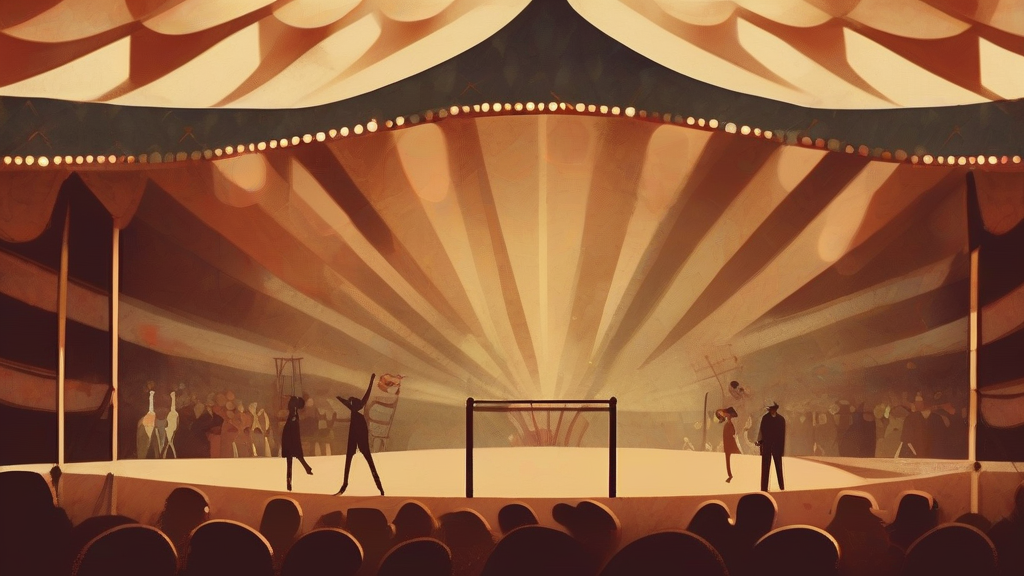
What does sideshow mean?
A sideshow is a secondary performance, attraction, or spectacle presented alongside a larger event. At a fair or entertainment event, it might refer to a comic act, exhibition, or other attraction that is less prominent than the main programme. Figuratively, the word describes an issue or controversy that draws attention away from a more consequential subject: a scandal, dispute, or minor event can become a sideshow and dominate public discussion. The term often carries a dismissive implication, suggesting that the matter is peripheral or less significant than the central matter. Although it may refer to something genuinely intended as entertainment, its metaphorical use is especially common in reporting on politics, business, and public controversies. In both senses, the defining feature of a sideshow is its subordinate position relative to a larger event or concern.
nounA secondary show or attraction that accompanies a larger event, or figuratively an issue or activity that distracts from a more important matter.
- A secondary show, entertainment, or attraction accompanying a larger event.
- An issue, controversy, or activity that distracts attention from something more important.
"The political dispute became a sideshow that diverted attention from the economy."
"A juggling act was one of the sideshows at the village fair."
"The inquiry over the minister's expenses turned into a sideshow that overwhelmed the original investigation."
The plural is formed by adding -s. Sideshows is especially common for several secondary attractions or distractions.
"The competing investigations turned into political sideshows."
Sometimes the biggest attraction is the one happening away from the main stage.
Reviewed by Deb Chak, Editor. AI-assisted content curated by RJS Tech Solutions LLP.
Etymology of sideshow
The word is a transparent compound of side and show. Side comes from Old English side, while show ultimately derives from Old English scēaw, meaning a sight, view, or spectacle, and is related to forms meaning to look or see. The compound was originally used for an entertainment presented in connection with a larger show and was later extended to describe a distracting event or controversy of lesser importance.
How sideshow is actually used
The word often implies that the spectacle or controversy is less important than the principal event. It is commonly used figuratively in political and journalistic writing and may sound mildly dismissive.
Easily confused with sideshow
A sideshow is a secondary spectacle or distracting event, whereas a sideline is an activity or position peripheral to the main event.