What does sieving mean?
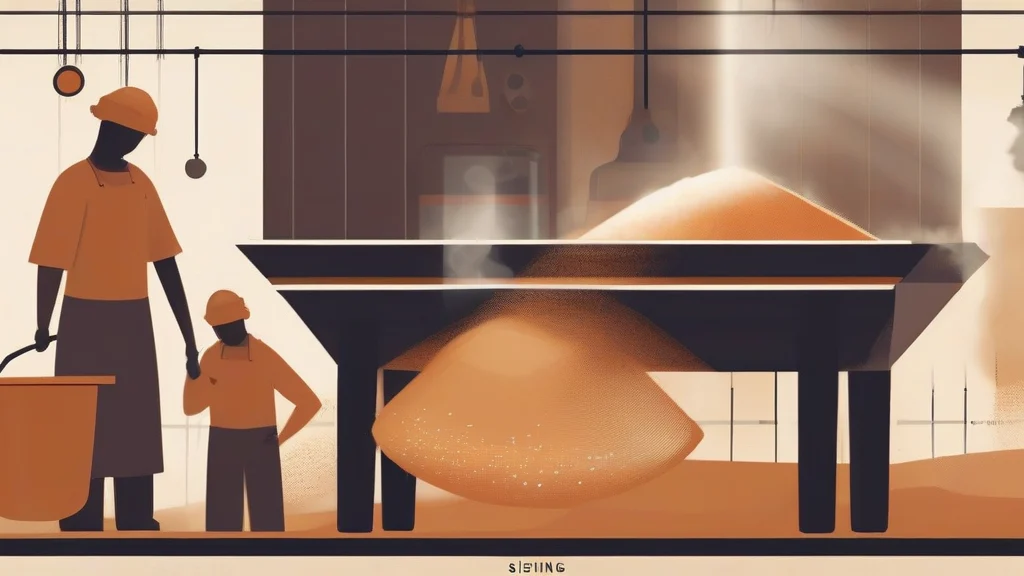
Sieving is a fundamental process used to separate particles of different sizes from a mixture. It involves passing the mixture through a sieve or a mesh, allowing the larger particles to be removed while the smaller particles pass through. This process is widely used in various industries, including food processing, mining, and construction. Sieving is an essential step in ensuring the quality and purity of materials. It is a simple yet effective method that has been used for centuries. The process of sieving can be manual or automated, depending on the scale and complexity of the operation. In addition to its practical applications, sieving has also been used in scientific research to separate and analyze particles. Overall, sieving is a versatile and essential process that plays a critical role in many industries and fields.
verbThe act of separating particles of different sizes from a mixture, typically by passing the mixture through a sieve or a mesh. This process is often used in various industries, such as food processing, mining, and construction.
- 1. The act of separating particles of different sizes from a mixture, typically by passing the mixture through a sieve or a mesh.
"The farmer used a sieve to separate the wheat from the chaff."
"The farmer used a sieve to separate the wheat from the chaff."
"The laboratory technician used a sieve to separate the powder from the liquid."
Reviewed by Deb Chak, Editor. AI-assisted content curated by RJS Tech Solutions LLP.
Etymology of sieving
The word 'sieving' is derived from the Old English word 'sīfan', which means 'to sift'. This word is also related to the Old Norse word 'sífa', which means 'to sift' or 'to separate'. The process of sieving has been used for centuries, and its importance has been recognized in various cultures and industries.
How sieving is actually used
Sieving is a formal process that is often used in scientific and technical contexts. It is commonly used in industries such as food processing, mining, and construction. In addition to its practical applications, sieving has also been used in scientific research to separate and analyze particles. The process of sieving can be manual or automated, depending on the scale and complexity of the operation.