
What does silverware mean?
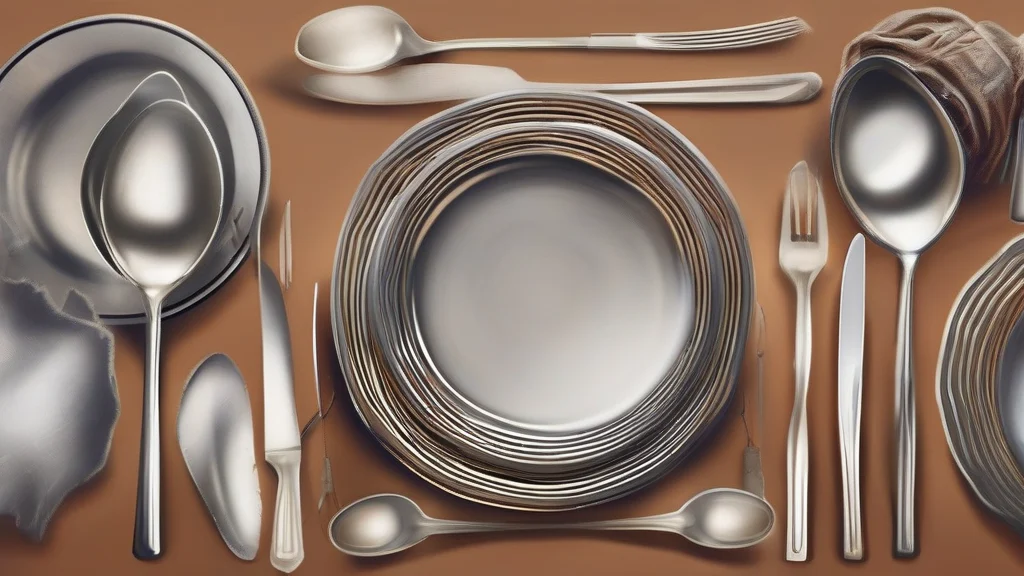
Silverware is a noun for eating utensils and table objects made of silver, particularly the knives, forks, spoons, and serving pieces associated with a formal meal. In contemporary English, it is often used more broadly for cutlery, even when the utensils are not actually made of silver. The word has traditionally carried an elegant, ceremonial, or nostalgic association, recalling formal dinners, polished table settings, and households in which silver service was a sign of refinement. It is normally a mass noun, so it takes “a piece of silverware” rather than a regular plural. In American English, “flatware” is a frequent synonym for the utensils themselves, while “tableware” is broader and can include dishes and serving vessels. Although stainless steel has largely replaced silver in everyday dining, silverware remains important in the vocabulary of ceremonial table settings, hospitality, and antique collecting.
nounUtensils and tableware made of silver, especially knives, forks, spoons, and serving pieces. In modern usage, the term can also refer more broadly to metal cutlery, particularly in a formal table setting.
- Utensils and tableware made of silver, especially knives, forks, spoons, and serving pieces.
- More broadly, the eating utensils used for serving and eating food, especially in a formal dining context.
- Decorative or household articles made of silver, including ornaments and presentation pieces.
"The host polished the silverware before dinner."
"The silverware was arranged carefully around the plate."
"This restaurant is known for its elegant silverware and impeccable service."
Usually treated as an uncountable mass noun; singular forms such as “a piece of silverware” are used when referring to individual items.
"The drawer was full of silverware."
Before stainless steel became standard in kitchens, polished silver was the benchmark for formal dining—and the name “silverware” preserves that glittering memory.
Reviewed by Deb Chak, Editor. AI-assisted content curated by RJS Tech Solutions LLP.
Where does silverware come from?
Silverware is an English compound formed from silver and ware, with “ware” meaning goods, articles, or implements. The compound is recorded from the early 17th century and originally referred to objects made of silver; its meaning later broadened to cover silver table utensils and related cutlery. Silver itself continues the Old English word seolfor, while silversmith and silvery are later formations built on the same lexical root.
How silverware is actually used
Usually used as a mass noun and treated as uncountable: “silverwares” is not a standard plural. The term has a formal or traditional association, although it is also used casually for metal cutlery. British and American speakers use the word, with “flatware” especially common in American English.
Easily confused with silverware
Flatware means eating utensils such as knives, forks, and spoons, usually made from stainless steel, whereas silverware traditionally refers specifically to utensils or objects made of silver or silver-plated metal.
Tableware includes dishes, bowls, serving vessels, and other items used at meals, while silverware focuses more closely on cutlery and objects made of silver.