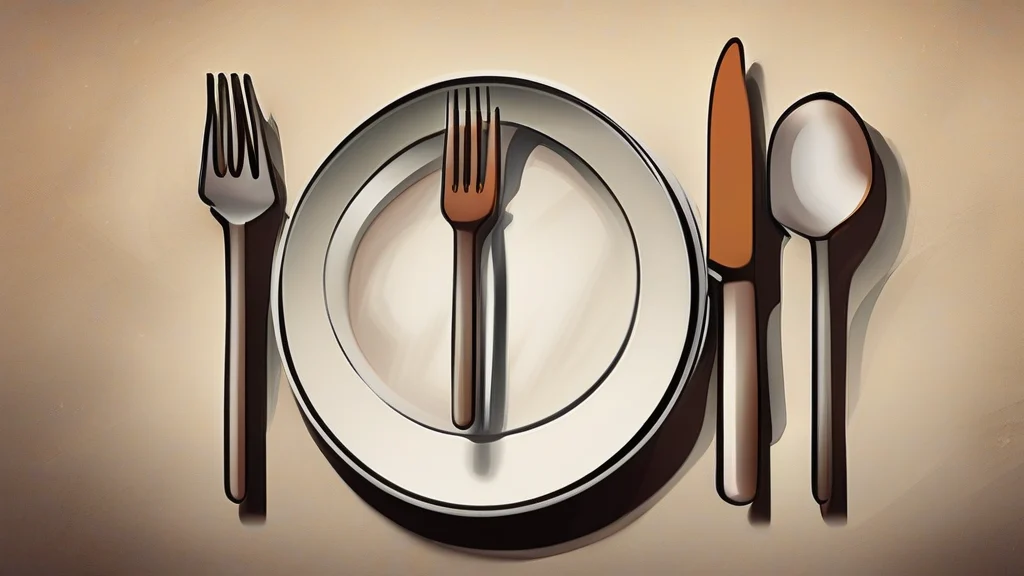
What does cutlery mean?
Cutlery is the collective term for the hand-held implements used to eat and serve food, above all knives, forks, and spoons laid out at a place setting. It functions as an uncountable noun in English, so one speaks of 'more cutlery' or 'a set of cutlery' rather than counting individual pieces under that name. The word is standard in British English, where it is the natural everyday term for table utensils, while American speakers typically reach for 'silverware' or 'flatware' instead — a useful distinction for anyone navigating menus, shops, or household lists across regions. Cutlery carries largely neutral connotations, though adjectives such as 'polished', 'good', or 'plastic' lend it registers ranging from formal dining to casual picnics. Its history is surprisingly deep: it derives through Old French from the Latin 'culter', meaning a knife or plow blade, linking the humble dinner fork to some of humanity's oldest cutting tools. Knowing the word matters because it anchors countless practical contexts, from etiquette guides to kitchen inventories.
nounKnives, forks, and spoons used for eating and serving food; the collective implements of tableware used to cut, spear, and convey food at meals.
- Eating and serving utensils collectively — knives, forks, and spoons used at the table.
"The waiter set out polished cutlery beside each plate before the first course arrived."
"She arranged the cutlery carefully, placing the fork on the left and the knife on the right of each setting."
"For the picnic they brought disposable plastic cutlery rather than their good silver."
As a mass noun, cutlery does not take a plural ending. Quantity is expressed with phrases like 'pieces of cutlery' or 'sets of cutlery'.
"After the party, several pieces of cutlery had gone missing from the drawer."
The word 'cutlery' traces back to the Latin 'culter' — a plow blade — so every knife on your dinner table is a distant cousin of the farmer's plough.
Reviewed by Deb Chak, Editor. AI-assisted content curated by RJS Tech Solutions LLP.
Etymology of cutlery
Cutlery comes from the Old French 'coutellerie', meaning the craft or trade of knife-making, which derives from 'coutel' (knife) and ultimately from the Latin 'cultellus', a diminutive of 'culter' — a word denoting both a knife and a plow blade. The term entered English in the medieval period, when the 'cutler' was the craftsman who made and sold knives and edged tools, and it gradually narrowed to mean eating utensils collectively. Its English cousins include 'coulter', the blade of a plow, and 'cutlass', both descending from the same Latin root.
How cutlery is actually used
Treated as an uncountable (mass) noun in standard usage — it has no plural form and takes no indefinite article in general statements ('We need more cutlery', not 'a cutlery'). In British English it is the everyday term for eating utensils; American English more often uses 'silverware' or 'flatware'. The term can extend by extension to cutting implements generally, but its core sense remains table utensils.
Easily confused with cutlery
A cutlet is a small piece of breaded meat, while cutlery refers to eating utensils such as knives, forks, and spoons.