
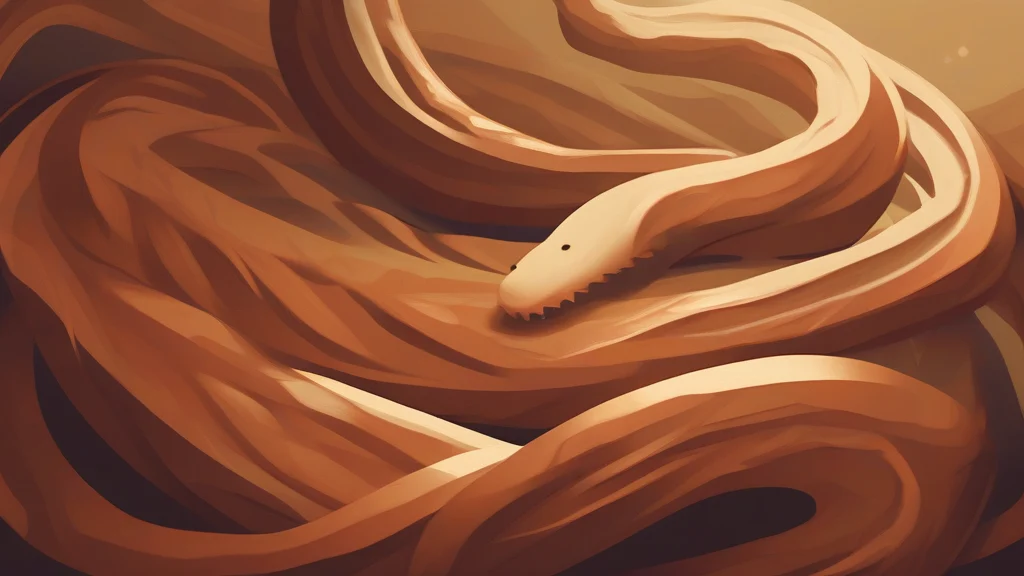
What does slithered mean?
Slithered is the past tense and past participle of slither, a vivid verb for moving with a smooth, twisting, or writhing motion. It is especially effective for snakes and other limbless or low-moving creatures, but it can also describe people, vehicles, liquids, or abstract things whose movement seems indirect, sinuous, or furtive. The word lends itself to descriptive and literary writing because it evokes both physical movement and a hint of stealth or instability. “The snake slithered into the reeds” presents the image directly, while figurative uses often suggest evasion, secrecy, or a slippery change of direction. Although it can sound dramatic, it is standard in British and American English. It is most useful when the motion is genuinely twisting, gliding, or slinking rather than merely a straightforward slide.
verb (past tense and past participle)Moved with a smooth, twisting or writhing motion, especially in a snake-like way. It can also describe moving or proceeding quietly, furtively, or with an indirect, sinuous course.
- Moved with a smooth, twisting, or writhing motion, especially in a snake-like way.
- Moved or proceeded quietly, furtively, or with an indirect, sinuous course.
"The snake slithered between the reeds and disappeared into the undergrowth."
"A dark shape slithered beneath the fence, vanishing into the shadows."
"The negotiations slithered onward without producing a clear agreement."
Slithered captures the moment a snake becomes a moving ribbon.
Reviewed by Deb Chak, Editor. AI-assisted content curated by RJS Tech Solutions LLP.
Where does slithered come from?
Slithered is the past tense and past participle of slither, a verb recorded in English by the early 16th century. The precise ultimate origin of the Middle English form is uncertain. Related English forms include the noun slitherer and the adjective slithery.
Related word forms
How slithered is actually used
The verb is vivid and commonly appears in descriptive or literary prose. It is not limited to snakes, although snake-like movement is its most immediate association; figurative uses often suggest furtiveness, evasion, or a difficult, indirect course.