
What does snake mean?
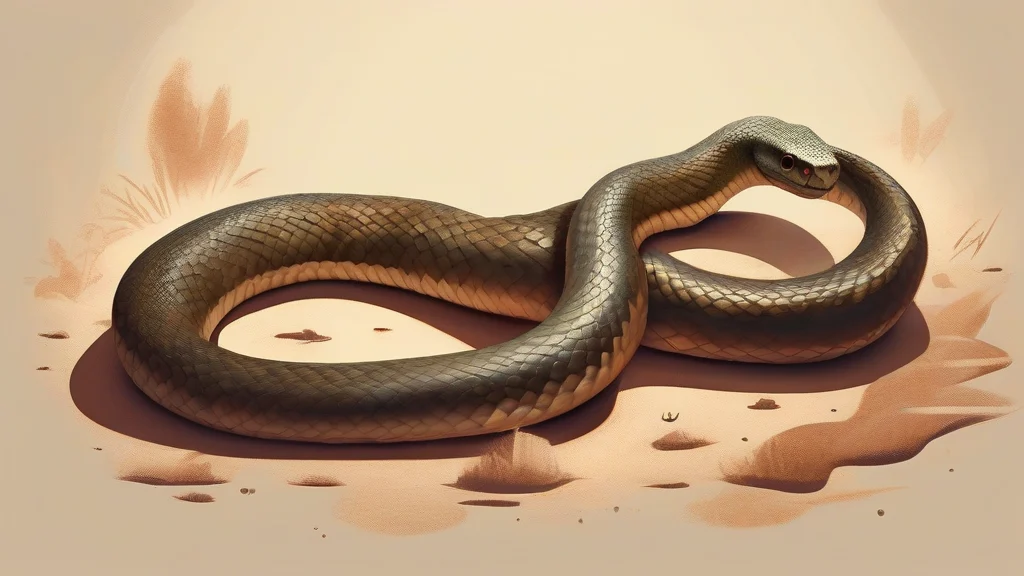
A snake is a long, slender reptile that moves by flexing and stretching its body, usually with no limbs. The word also has figurative uses: informally, it can describe a deceitful or treacherous person, while as a verb it means to travel or move in a winding, indirect path. In descriptions of movement, “snake” evokes a curving, twisting line, as when a road follows a river through a valley. The word can also imply cunning or furtiveness when applied to people, especially in the phrase “as sly as a snake.” Because it combines a clear physical image with a strong figurative association, “snake” is useful whenever the intended meaning concerns either reptilian movement or opportunistic, untrustworthy behavior.
A long, slender, limbless reptile with a flexible body, usually covered in scales; figuratively, a deceitful or treacherous person.
"The encyclopedia includes detailed photographs of a snake shedding its skin."
To move in a winding or twisting path; informally, to act in a deceitful or furtive manner.
"The runner snaked around the obstacles and crossed the finish line."
The regular plural is used for individual reptiles and for the figurative meaning of deceitful people.
"Several snakes were hiding beneath the rocks."
A snake's tongue flicking in and out samples the air for scents, helping it locate prey and detect nearby danger.
Reviewed by Deb Chak, Editor. AI-assisted content curated by RJS Tech Solutions LLP.
Where does snake come from?
The English word comes from Old English “snaca,” referring to a snake and related to Old Norse and other Germanic forms with a similar meaning. It developed from Proto-Germanic *snēkô, probably an inherited word with no certain connection to a wider outside language family. Modern English derivatives include “snaky,” describing something snake-like, and the verb “snaking,” meaning to move in a twisting path. The figurative sense for a deceitful person developed from the traditional association of snakes with guile, danger, and temptation.
Related word forms
How snake is actually used
“Snake” is a neutral everyday word for the reptile. Its use for a person is generally informal, disparaging, and somewhat old-fashioned, though it remains common in figurative political and social language. As a verb, “snake” often suggests moving in an indirect or twisting way; “sneak” is more strongly associated with secrecy and furtiveness.
Easily confused with snake
A snake is an animal, while a snack is a small amount of food.
A snake is a reptile; “sneak” means to move stealthily or to enter somewhere without being noticed.