
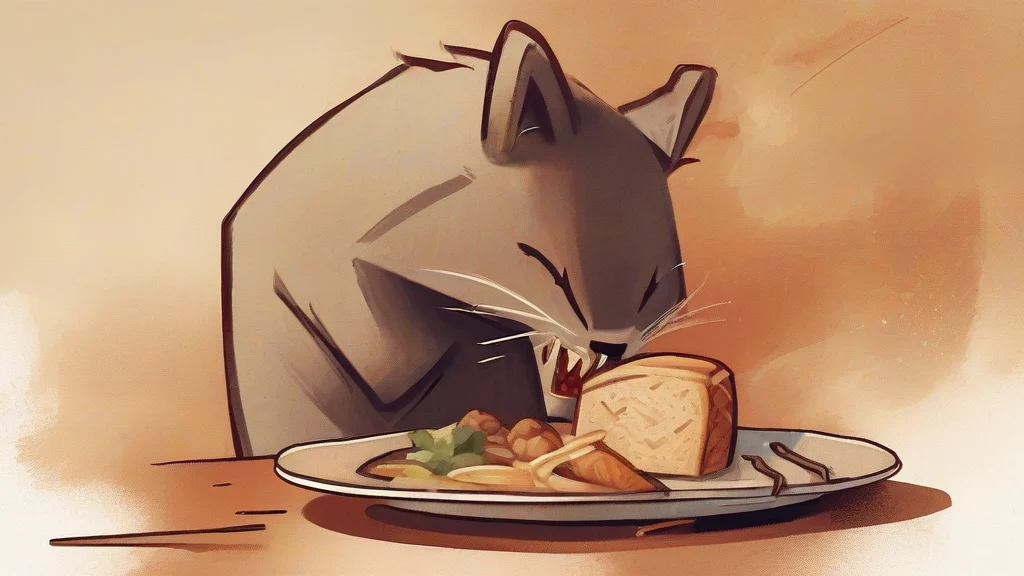
What does snarfing mean?
Snarfing is an informal way of describing the act of taking something for oneself without permission, especially by quickly or furtively grabbing food. The expression has a playful, often comic quality, but it can also carry a stronger implication of theft when the thing taken belongs to someone else. Typical contexts involve someone snarfing a sandwich, a pastry, or another serving while another person is present. Although snarfing can technically apply to other small objects, food is its dominant association, and the word often conveys quickness and lack of ceremony rather than elaborate planning. It is chiefly associated with informal North American English, though it is also understood in British English. In everyday conversation, “snarfing” effectively presents someone as helping themselves to other people’s food in a conspicuously unapologetic manner.
verbTo steal or take something, especially food, often quickly and without permission.
- To steal or take something, especially food, typically in a quick or furtive manner.
"He snatched the last pastry from the tray while someone else was helping himself to coffee."
"The children snarfed the cookies before their parents came downstairs."
"I saw him snarf the last slice of pizza when he thought nobody was looking."
Someone who snarfing your lunch is not merely hungry; they have crossed a very specific line.
Reviewed by Deb Chak, Editor. AI-assisted content curated by RJS Tech Solutions LLP.
Where does snarfing come from?
The form comes from the verb “snarf,” an informal term for taking or grabbing something, especially food. Its ultimate origin is uncertain, and it is not generally associated with a securely established family of cognates in other languages. The modern usage developed as English slang, particularly in North America.
Related word forms
How snarfing is actually used
Informal and often humorous, but it can imply theft, dishonesty, or disregard for social boundaries. It is more commonly associated with food than with objects in general.