
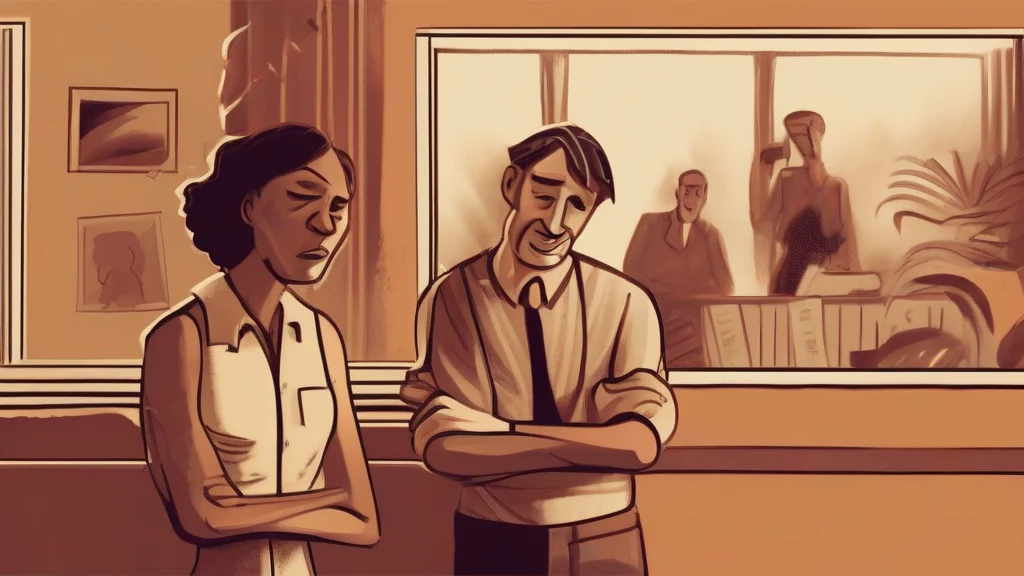
What does snarky mean?
“Snarky” is an informal adjective describing words, behaviour, or attitudes that are sarcastic, mocking, and often deliberately sharp. It suggests a tone of derision or playful contempt rather than straightforward criticism: a snarky comment may be intended as witty, but it can also sound cutting or unkind. The word is common in informal speech and in descriptions of conversations, reviews, messages, and social-media exchanges. It is especially appropriate when the humour is mild but unmistakably sardonic, as in “a snarky reply” or “a snarky attitude.” Because it often implies ridicule, “snarky” can carry a slightly negative connotation even when the speaker's intention is humorous. It is related to the noun and verb “snark,” but the adjective is most often used to characterise a remark or a manner of speaking.
adjectiveMocking, sarcastic, and often somewhat sharp or disrespectful in tone. “Snarky” is commonly used for remarks, comments, or behaviour that express contempt or derision.
- Mocking or sarcastic, especially in a manner that is sharp, cutting, or playfully contemptuous.
"She made a snarky remark about his inability to find the document."
"His snarky reply made the entire meeting fall silent."
"The review was full of snarky observations about the restaurant's pretentious menu."
A snarky comment can be sharper than a joke: its wit often depends on making the other person feel small.
Reviewed by Deb Chak, Editor. AI-assisted content curated by RJS Tech Solutions LLP.
Where does snarky come from?
“Snarky” is derived from the English word “snark,” which is recorded from the early 19th century in senses related to mocking, sneering, or sarcastic behaviour. The ultimate origin of “snark” is uncertain, and it should not be confidently connected to a particular foreign language or older root. The suffix “-y” has long been used in English to form adjectives from nouns, as in “cloudy” or “hilly,” and in this case it gives “snark” the descriptive sense of being characteristically snarky.
Related word forms
How snarky is actually used
Informal and generally mildly critical or humorous in tone. It can describe a person's manner as well as a remark, comment, or message.
Easily confused with snarky
“Snarky” describes a sarcastic or mocking tone or remark, while “snark” can be a noun for such a remark or a verb meaning to make a sarcastic or cutting remark.