
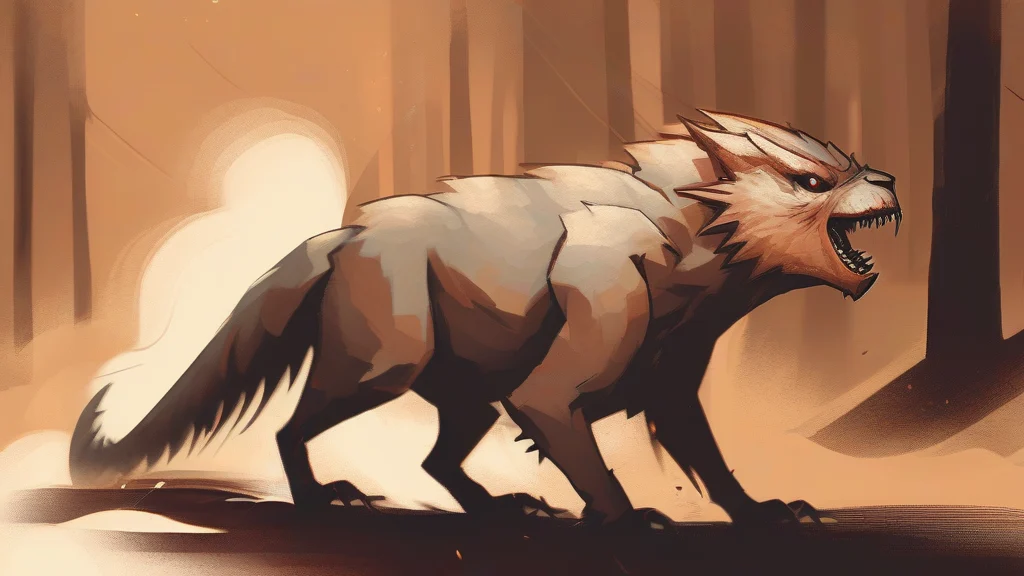
What does snarlier mean?
Snarlier is chiefly the comparative form of snarly, an informal adjective for angry, irritable, hostile, or vicious. Saying that someone is snarlier, or that a voice or growl has become snarlier, suggests an increase in hostility or ferocity and often carries a vivid, mildly derogatory tone rather than the neutrality of “angrier.” It is especially natural in descriptions of people, animals, voices, and facial expressions: a dog can look snarlier, while a rival may become snarlier after losing a point. Snarlier can also describe something that is more twisted or tangled, such as a cable or rope. Because it is an inflection rather than a separate lexical item, it normally appears when comparing two qualities or states: one dog is snarlier than another, or the animal grows snarlier as it backs away. In formal writing, “angrier,” “fiercer,” or “more hostile” may be clearer, but snarlier is useful when the intention is to convey a conspicuously fierce or menacing attitude.
adjectiveMore snarly, especially more angry, hostile, or vicious; also, more twisted or tangled.
- More angry, hostile, aggressive, or vicious.
- More twisted, knotted, or tangled.
"The dog became even snarlier when the stranger approached."
"The rescued dog looked snarlier as the crowd moved closer."
"The old cable had grown snarlier after months of twisting in the wind."
Snarlier is what a scowl becomes when it needs an upgrade: more snarly.
Reviewed by Deb Chak, Editor. AI-assisted content curated by RJS Tech Solutions LLP.
Where does snarlier come from?
Snarlier is the comparative degree of snarly. Snarly was formed in English from snarl with the suffix -y, while snarl developed from Middle English snarlen and has roots in Old English. Snarl is related to the Dutch verb snarlen, and the ordinary English comparative suffix -er produces the form snarlier.
Related word forms
How snarlier is actually used
The primary sense is informal and often vivid or mildly derogatory. It is common in descriptions of people, animals, voices, and facial expressions, while the tangled or twisted sense is less frequent.